In the previous installment, we explored the basic concepts and significance of Yin and Yang. This article delves deeper into the characteristics and meaning of Yin polarity, one of the two polarities, and examines how it functions within the Four Pillars Four Pillars theory. It is crucial to remember that Yin polarity is not merely dark or passive, but an essential element that maintains balance in all existence.
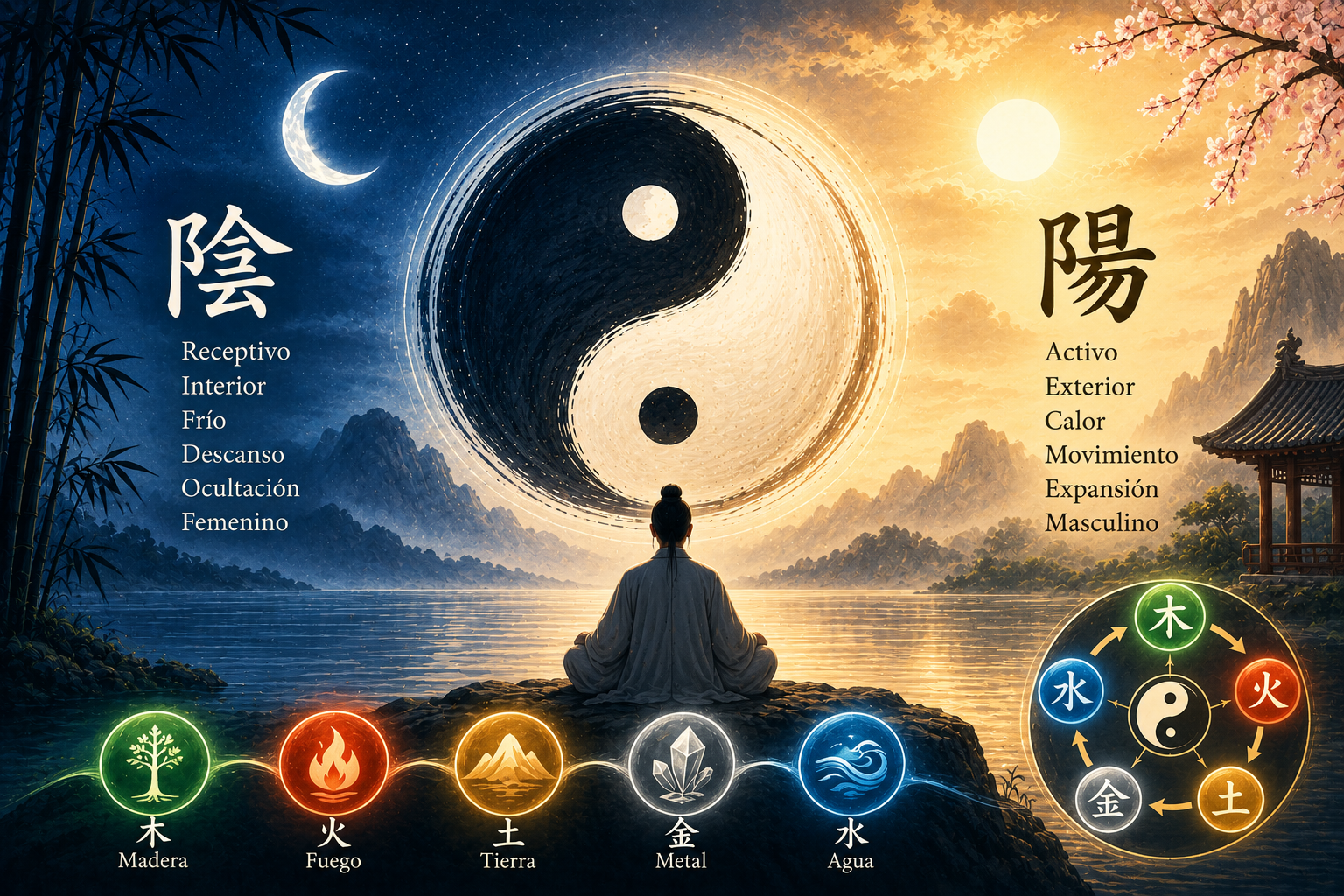
Yin polarity is inherently receptive, internal, and static. It can be likened to darkness, coldness, night, femininity, softness, downward motion, or inwardness. However, these characteristics are by no means exclusively negative. Rather, Yin polarity symbolizes a fundamental power that embraces and fosters all growth.
While Yang is an energy that radiates outward and manifests, Yin polarity is an energy that converges inward, stores, and preserves. These two energies constantly interact, creating change.
We can easily find characteristics of Yin polarity in our daily lives.
Night and Day: Night is a time for quiet rest, corresponding to Yin polarity, contrasting with the active Yang energy of day.
Moon and Sun: The moon, illuminating the night and constantly changing, is a symbol of Yin polarity, contrasting with the hot, steady Yang energy of the sun.
Water and Fire: Water flows downward and nourishes all things, possessing Yin polarity qualities, balancing the upward-burning Yang qualities of fire.
Women and Men: Traditionally, women symbolize softness, receptivity, and introversion, likened to Yin polarity, while men symbolize activity, assertiveness, and extroversion, likened to Yang polarity. This represents a difference in roles, not a matter of superiority.
The Eight Characters (`Saju Palja`) are composed of four pillars (representing year, month, day, and hour of birth) and eight characters, each formed by the Heavenly Stems (the Heavenly Stems) and the Earthly Branches (the Earthly Branches). Each of these eight characters possesses either a Yin or a Yang attribute.

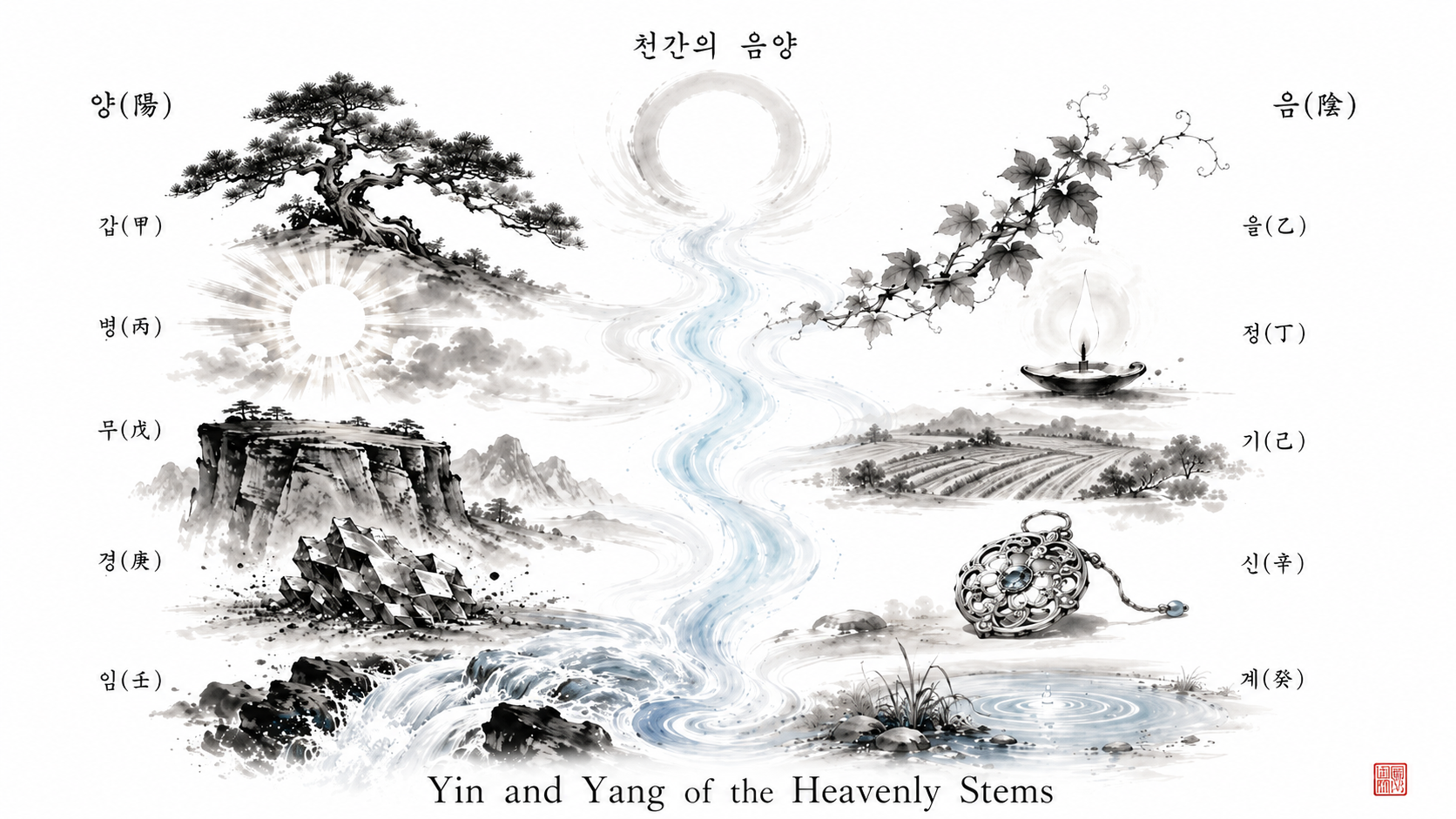
For instance, even within the same element, ‘wood,’ ‘Gap-mok (甲木)’ represents Yang wood, while ‘Eul-mok (乙木)’ represents Yin polarity wood. If Yang ‘Gap-mok’ embodies the resilient, outward-growing nature of a towering tree or pillar, Yin polarity ‘Eul-mok’ signifies the flexible, spreading tendency of a vine or the gentle growth of grass. In this way, even within the same five elements, their characteristics and manifestations subtly differ depending on their Yin or Yang polarity.
When there are many Yin polarity characters or they are positioned in specific ways within one’s `Saju Palja`, Yin polarity characteristics can strongly influence that person’s disposition or the flow of their fortune. This may manifest as an introverted, cautious, and deeply thoughtful or planning tendency.
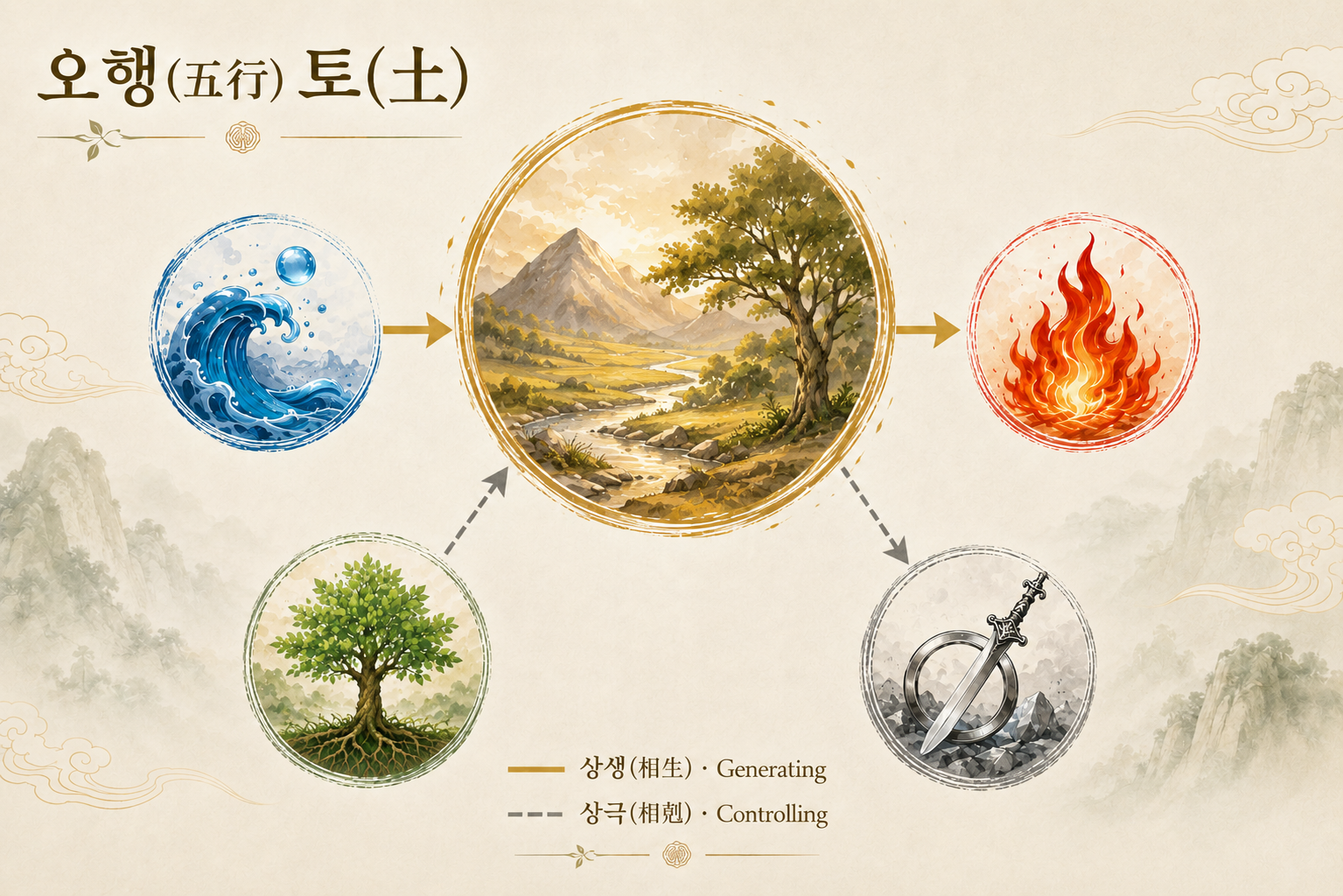
Yin and Yang provide the most fundamental framework for understanding the Five Elements (Wood, Fire, Earth, Metal, Water). Every element is divided into Yin and Yang.
Yin Wood (乙木): Represents soft grass, flowers, or vines, signifying flexibility and adaptability.
Yin Fire (丁火): Like candlelight or a bonfire, it emits a subtle, sustained light, symbolizing inner passion or spiritual energy.
Yin Earth (己土): Like fertile fields or moist ground, it possesses the nature to nurture and embrace all things.
Yin Metal (辛金): Like a jewel or a sharp blade, it is precise and delicate, signifying refined beauty.
Yin Water (癸水): Like dew, rainwater, or groundwater, it quietly permeates and nourishes all things, symbolizing wisdom and insight.
Thus, the Yin polarity aspects of the Five Elements manifest their characteristics in different ways, adding depth to the interpretation of each character in a the Four Pillars reading.
One of the most common misconceptions among beginners is viewing Yin polarity as ‘bad’ or ‘negative.’ However, Yin and Yang are not concepts of good or bad, but two complementary energies. Yang cannot exist without Yin polarity, and vice versa.
What is crucial is the ‘balance’ of Yin and Yang within one’s `Saju Palja`. Imbalance occurs when the Yin polarity energy is excessively strong or weak, or when it fails to harmonize with Yang energy. This can influence specific dispositions or the flow of fortune. For example, if Yin polarity energy is too strong, one might become passive or indecisive; if it’s too weak, one might lack inner depth.
A significant objective of the Four Pillars Four Pillars theory is to assess the state of Yin and Yang balance through the Four Pillars and explore methods to supplement deficient energies or moderate excessive ones.
Misconception 1: Is Yin polarity weak and passive?
While Yin polarity is receptive and internal, this signifies depth and potential, not weakness. Just as water can penetrate rock and seeds sprout underground, Yin polarity possesses a quiet yet powerful vitality and enduring strength.
Misconception 2: Is Yin polarity associated with misfortune or negativity?
While Yin polarity can be linked to night, winter, or death, these are merely phases in a cycle, not negative meanings. Just as night brings rest and winter leads to spring, Yin polarity represents a crucial time for preparation and storage, essential for advancing to the next stage.
In the Four Pillars Four Pillars theory, Yin and Yang are not criteria for value judgment but a fundamental classification system for understanding all phenomena in the world and a tool for grasping the flow of energy.
In the next installment, we will explore Yang polarity, the contrasting concept to Yin polarity, symbolizing emanation and activity. This will be an important time to understand how Yin and Yang interact to create all phenomena in the universe.