Among the methods of fortune-telling rooted in Eastern wisdom, Yukhyo and Four Pillars each possess distinct principles and purposes. We explore the fundamental differences between these two systems and how they provide insight into our lives and destinies—from the long-term flow of life revealed by Four Pillars to the specific answers for immediate concerns offered by Yukhyo.
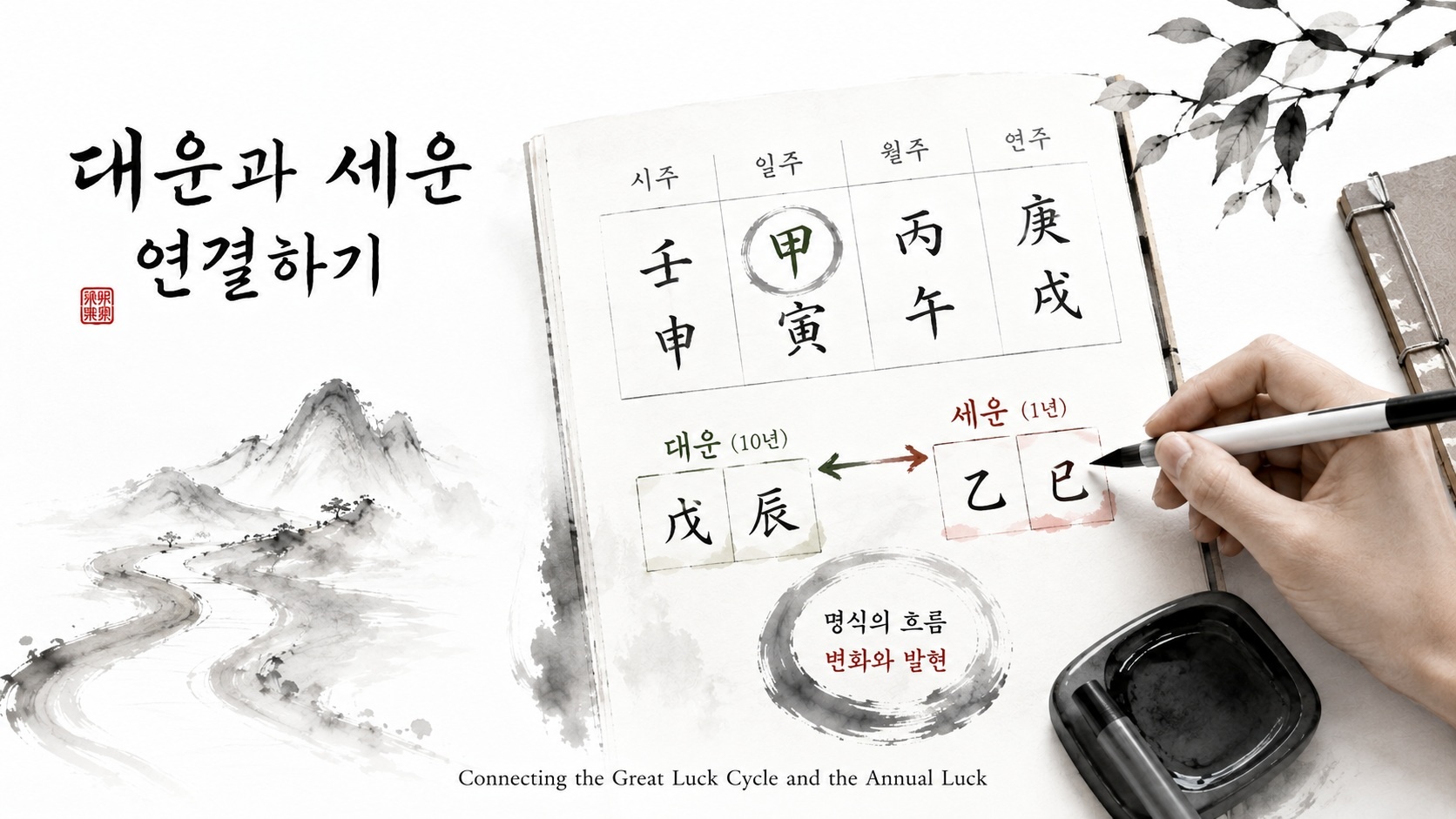
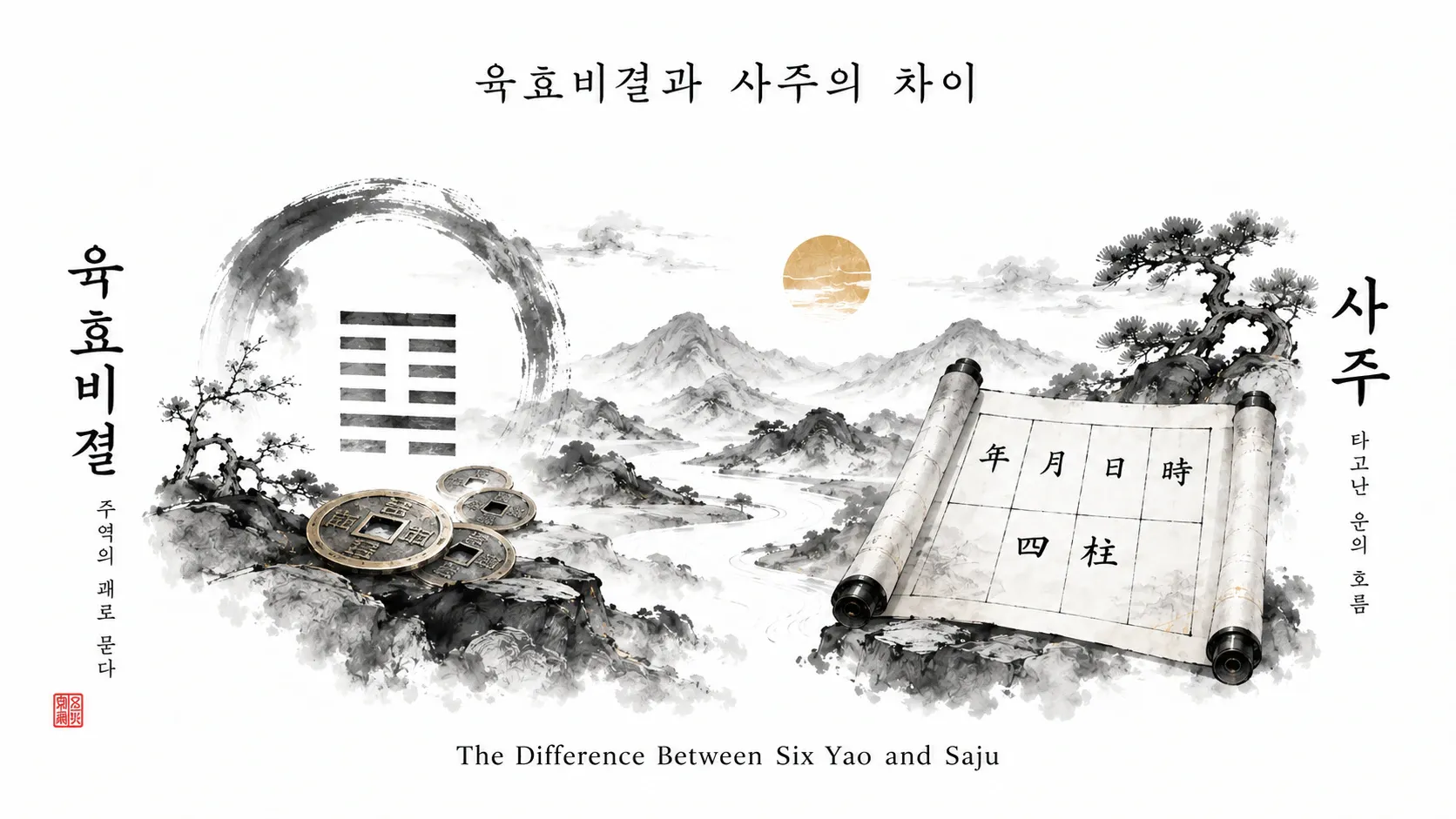
Yukhyo and Four Pillars are significant tools long used in East Asian culture to predict fortune and gain wisdom for life. They differ clearly in their approach and intended purpose. While Four Pillars is a branch of Four Pillars theory that analyzes lifelong fate and inherent traits based on one’s birth date and time, Yukhyo is a form of divination that seeks answers to specific questions at a given moment using hexagrams from the I Ching.
This difference implies more than just distinct objects of prediction; it reflects divergent philosophical perspectives on understanding human destiny. Four Pillars maps the big picture of an individual’s potential and destiny based on the fixed, unchangeable data of birth, whereas Yukhyo attempts to find the optimal answer to a specific problem within a constantly changing situation. Thus, the two are complementary and can be utilized effectively in different contexts.
The origins of Four Pillars date back to the Tang Dynasty, when Li Xuzhong began predicting fortune using the stem-branch cycle of a birth date. While he primarily analyzed destiny based on the Year Pillar, his work laid the essential foundation for later Four Pillars theory. His method was a significant, systematic attempt to connect an individual’s innate time of birth to their destiny.
During the Song Dynasty, Seo Japyeong advanced these theories by establishing Ziping Mingli, which analyzes Four Pillars primarily centered on the Day Master. This became the core framework of what we recognize today as Four Pillars, providing a basis for more precisely predicting unique personal traits and the flow of one’s life. Ziping Mingli evolved into a tool for gaining deep insight into various aspects of life, including personality, aptitude, and interpersonal relationships, rather than just simple predictions of luck.
Yukhyo has its roots in the ancient Chinese I Ching. The I Ching was originally a philosophical text and a book of divination for explaining the principles of change in the universe. The Yukhyo method, which uses the hexagrams and lines of the I Ching to predict the future, was refined during the Han Dynasty, with various techniques for determining fortune being studied and compiled.
Yukhyo involves casting coins or yarrow stalks to obtain a hexagram. By analyzing the changing lines, or moving lines, within that hexagram, practitioners predict shifts in fortune and circumstances. Because of its accuracy, it has been used since ancient times as a standard for national decisions or major personal matters. Unlike the static nature of Four Pillars, Yukhyo is a form of divination specialized in reading dynamic changes.
The fundamental difference between Four Pillars and Yukhyo lies in the objective of the prediction. Four Pillars seeks to understand the combination of energy present at the moment of birth—the innate nature and the lifelong flow of destiny. It serves as a blueprint of an entire life, showing the traits one is born with and the major shifts they may encounter.
Conversely, Yukhyo aims to find answers to specific, shifting situations, such as whether a project will succeed or how to resolve a pressing issue. If Four Pillars answers the fundamental question of “who am I and what kind of life will I lead?”, Yukhyo focuses on the practical question of “what should I do in this situation right now?”. In this sense, Four Pillars is like a compass for life, while Yukhyo acts as a signpost at a crossroads.
This distinction reflects two views on destiny in Eastern philosophy: acknowledging the fixed nature of one’s innate fate while valuing the dynamic nature of changing luck. Four Pillars leans toward innate fate, while Yukhyo leans toward current luck.
In Korea, Four Pillars is the most popular and widely known method of fortune prediction, used extensively to consult on career, marriage, health, and wealth. Checking Four Pillars before making significant life decisions is a common cultural practice, driven by a desire to understand one’s innate temperament and the flow of fortune.
While Yukhyo is less mainstream than Four Pillars, it is frequently used by experts to gain immediate, concrete answers to specific problems, such as whether a business will succeed, if one will pass an exam, or finding lost items. It is more common among those who study traditional divination in depth than among the general public.
As the home of both methods, China actively researches and utilizes both. Yukhyo, alongside the tradition of the I Ching, serves as a crucial pillar of divination, used as a basis for judgment in complex business decisions, major investments, and significant personal choices. There is a strong culture of seeking wisdom for future changes by deeply analyzing the hexagrams obtained through Yukhyo.
Four Pillars is also consistently studied and recognized as a significant discipline for gaining insight into individual destiny. In China, the two are often used in a complementary manner, seeking specific answers to current problems within the context of an individual’s innate destiny.
In Japan, a concept similar to Four Pillars exists called ‘Sichuzhuiming’ (Four Pillars), which is a localized version of Chinese Ziping Mingli. While used to predict destiny, other forms of Eastern divination and fortune-telling—such as Qimen Dunjia or Feng Shui—are often more widely known than Yukhyo. This highlights how preferred fortune-telling methods have developed differently based on each nation’s cultural background, philosophical traditions, and historical exchanges.
In modern society, Four Pillars serves as a vital tool for self-understanding and future planning beyond simple fortune-telling. By identifying innate strengths, weaknesses, and potential, it provides a reference for making better life choices. It can help, for instance, in finding a suitable career or recognizing and navigating potential conflicts in relationships.
Because Four Pillars reveals the big picture, it is useful for long-term design rather than short-term problem solving. It is like spreading out a grand map of life to confirm one’s current location and destination. Understanding one’s flow of destiny can reduce unnecessary anxiety and help individuals gain the wisdom to do their best within their given circumstances.
In our rapidly changing modern world, Yukhyo is highly useful for obtaining quick, specific advice on immediate issues. It can be applied when judging the outcome of stock investments, business contracts, job changes, exams, or disease prognoses. Yukhyo provides clear direction through the changes in hexagrams and lines based on the nature of the question.
This is akin to an expert consultation for specific situations, providing a clear standard for judgment when faced with complex problems. While Four Pillars offers advice on a grand scale, Yukhyo provides counsel on detailed execution plans.
One of the greatest misconceptions about Four Pillars and Yukhyo is that they fully determine our destiny and that we must simply submit to it. This misunderstands the essence of Eastern fortune-telling. Four Pillars merely shows one’s innate capacity and the major currents of fate; the outcome can change significantly depending on the choices one makes and the effort one puts forth within that framework. Destiny is not static; it contains the possibility of change based on our will and actions.
Similarly, Yukhyo suggests possibilities, warnings, and advice for specific questions, rather than prophesying an absolute future. The fortune or misfortune suggested by Yukhyo serves as an indicator of which direction we should take; positive results are only achieved through wise judgment and effort based on that guidance. Both methods do not exclude human free will; they should be understood as tools of wisdom to assist in making wiser choices. The true meaning lies in understanding the flow of destiny and responding actively, rather than blindly submitting to it.
This concludes our exploration of the differences between Yukhyo and Four Pillars, the final installment in our series on Eastern fortune-telling culture. We have seen how Four Pillars provides insight into an individual’s innate destiny, while Yukhyo acts as a source of wisdom for reading the changes in our current circumstances. These methods offer a glimpse into the depth of Eastern philosophy and provide diverse perspectives for exploring human life and fate. This culture of fortune-telling, which provides wisdom and insight in its own unique ways, will continue to offer inspiration for modern lives.