The Earthly Branches, one of the two pillars of the Four Pillars theory, are far more than just zodiac animals. They serve as a fundamental coordinate system for time, seasons, and directions, embedding the essential order of the universe. Grasping the unique energy and meaning behind each branch is essential for interpreting a birth chart. This article introduces the core concepts of the Earthly Branches and how they are applied in Four Pillars analysis.
Understanding the Earthly Branches
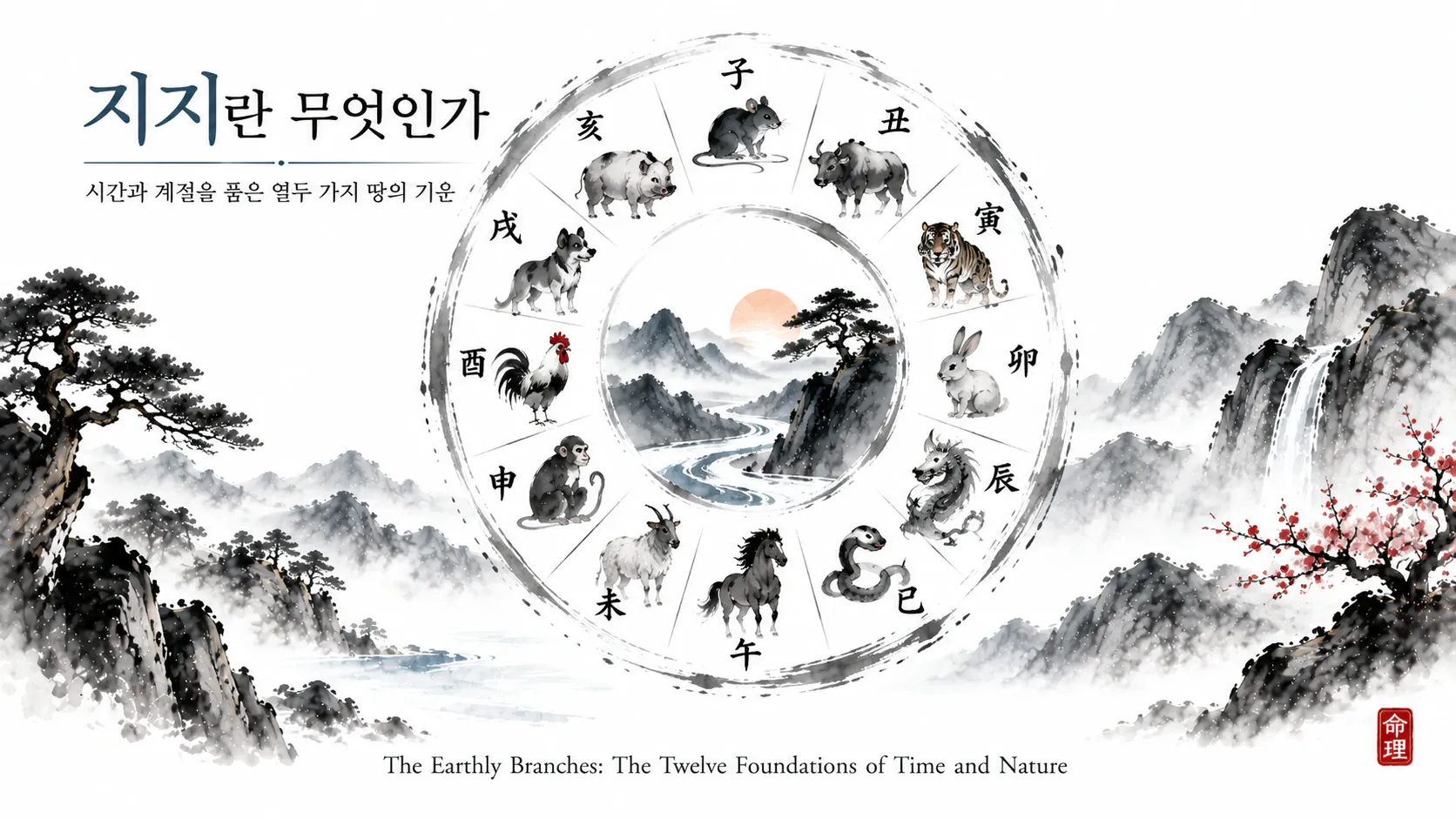
The Earthly Branches (Earthly Branches), a critical element of the Eight Characters (Four Pillars) alongside the Heavenly Stems (Heavenly Stems), consist of 12 distinct characters. Commonly known through zodiac animals—Ja, Chuk, In, Myo, Jin, Sa, O, Mi, Sin, Yu, Sul, and Hae (Hae)—these branches represent a comprehensive coordinate system encompassing universal time, space, and the cycles of nature.
The term Earthly Branches signifies the ‘energy of the earth.’ While the Heavenly Stems represent abstract energy, the Earthly Branches reflect the concrete, physical reality. Understanding them is essential to reading life patterns in a birth chart.
Basic Meanings of the Earthly Branches
Each of the 12 branches carries unique meanings that symbolize specific natural energy:
- Ja: Conception and beginnings.
- Chuk: Freezing and rest.
- In: Budding growth.
- Myo: Lush development.
- Jin: Significant growth.
- Sa: Fruition onset.
- O: Peak vitality.
- Mi: Maturity.
- Sin: Harvest and preparation.
- Yu: Fruition and convergence.
- Sul: Reaping and storage.
- Hae: Rest and future preparation.
Coordinate Systems: Seasons, Time, and Directions
The branches act as a coordinate system within the birth chart, deeply linked to specific seasons, times, and directions.
Seasonal Roles
The branches represent the 12 months of the year:
- Spring (Wood element): In, Myo, Jin
- Summer (Fire element): Sa, O, Mi
- Autumn (Metal element): Sin, Yu, Sul
- Winter (Water element): Hae, Ja, Chuk
The Month Branch (Month Branch) is critical for determining the seasonal regulation (Four Pillars’s climate and environment).
Time and Directional Significance
Each branch represents a two-hour block of the day and a specific cardinal direction, allowing practitioners to map energy flows within the spatial and temporal context of a life.
Properties: Five Elements and Yin and Yang
Each branch possesses a specific element and polarity:
- Five Elements (Five Elements): Each branch is associated with Wood element, Fire element, Metal element, Water element, or Earth element.
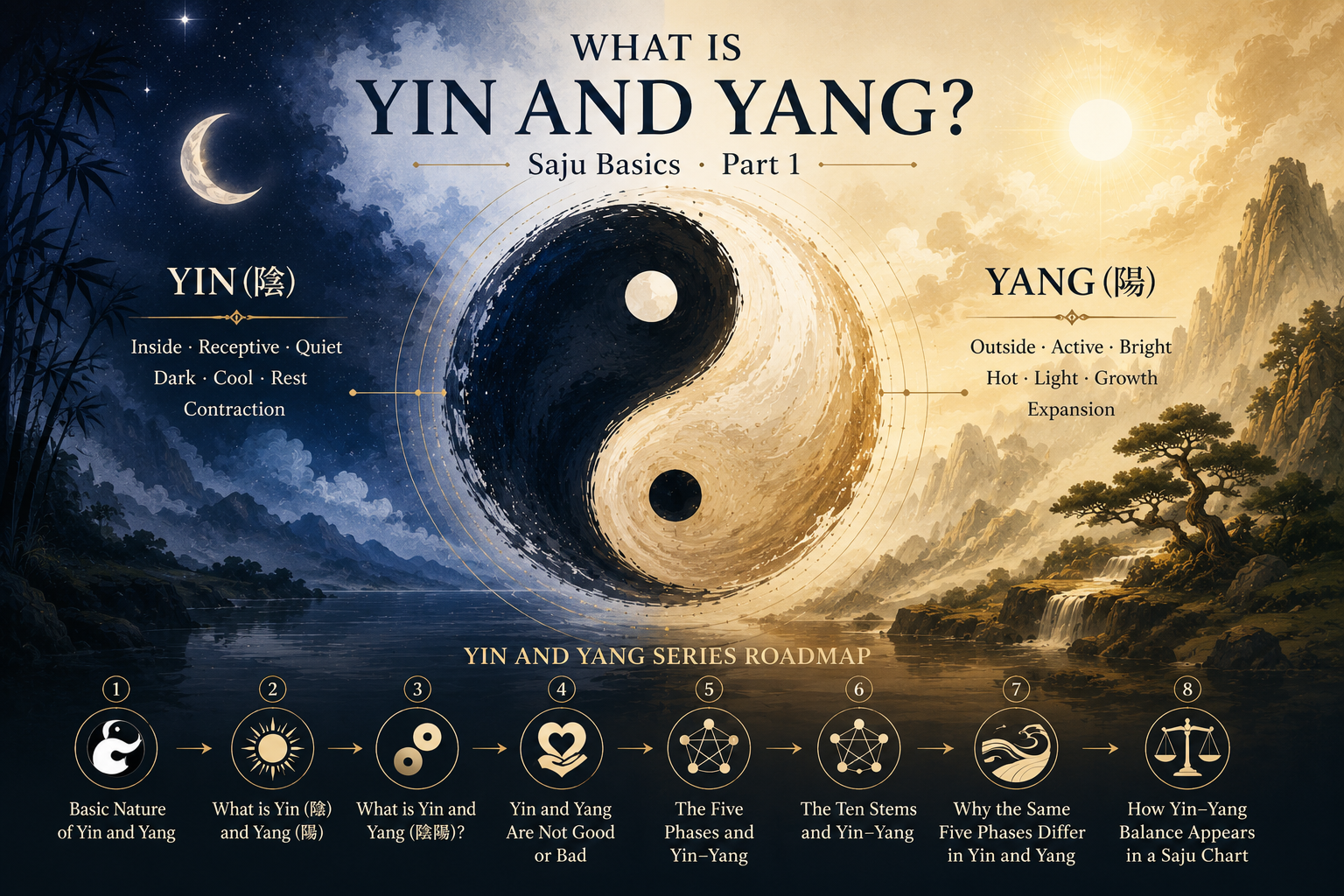
- Yin and Yang (Yin/Yang): Branches are classified as either Yang polarity or Yin polarity, indicating active or receptive energy.
The Hidden Stems: hidden stems
Every Earthly Branch contains hidden Heavenly Stems, known as hidden stems. These reveal internal potentials and complexities that go beyond the surface-level energy of the branch, essential for understanding interactions like clashes and combinations.
Placement in the Birth Chart
The significance of a branch depends on its position in the Four Pillars (Year, Month, Day, and Time columns). The Month Branch (Month Branch) and Day Branch (Day Branch) are particularly pivotal in defining personal traits and domestic relationships.
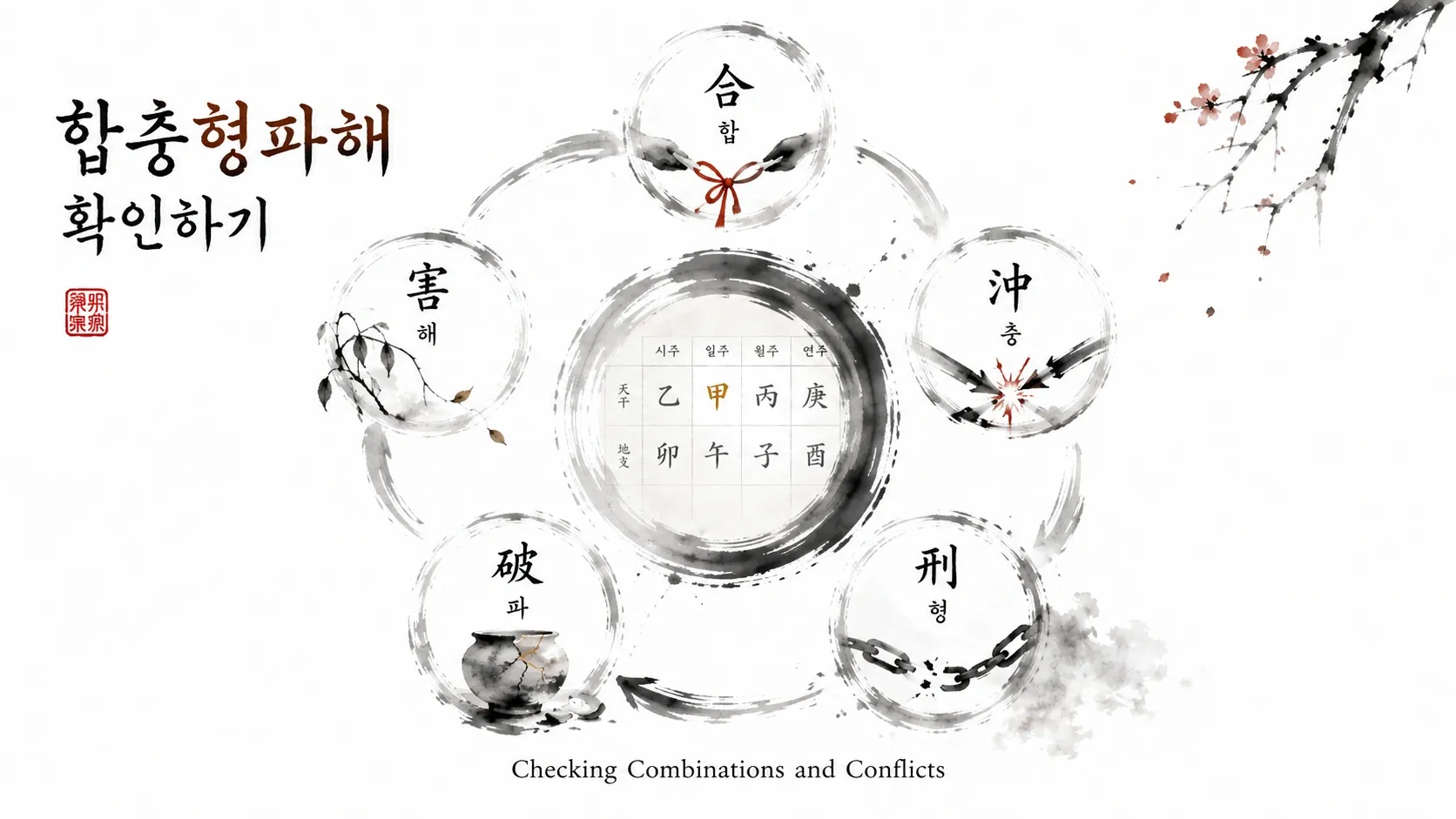
Interactions and Changes
Branches interact through complex relationships:
- Branch combination (Combinations): Merging for enhanced or new energy.
- Branch clash (Clashes): Disrupting existing conditions.
- Branch penalty, Branch break, Branch harm: Various types of conflicts or imbalances.
Common Misconceptions
Beginners often focus too narrowly on zodiac animals or make rigid, deterministic judgments about whether a branch is ‘good’ or ‘bad.’ Accurate interpretation requires viewing the branch in the context of the entire birth chart.
Summary Table
| Branch | Meaning | Season | Element |
|---|---|---|---|
| Ja | Start | Winter | Water element |
| Chuk | Rest | Winter | Earth element |
| In | Growth | Spring | Wood element |
| Myo | Development | Spring | Wood element |
| Jin | Surge | Spring | Earth element |
| Sa | Transition | Summer | Fire element |
| O | Peak | Summer | Fire element |
| Mi | Maturity | Summer | Earth element |
| Sin | Harvest | Autumn | Metal element |
| Yu | Convergence | Autumn | Metal element |
| Sul | Storage | Autumn | Earth element |
| Hae | Preparation | Winter | Water element |