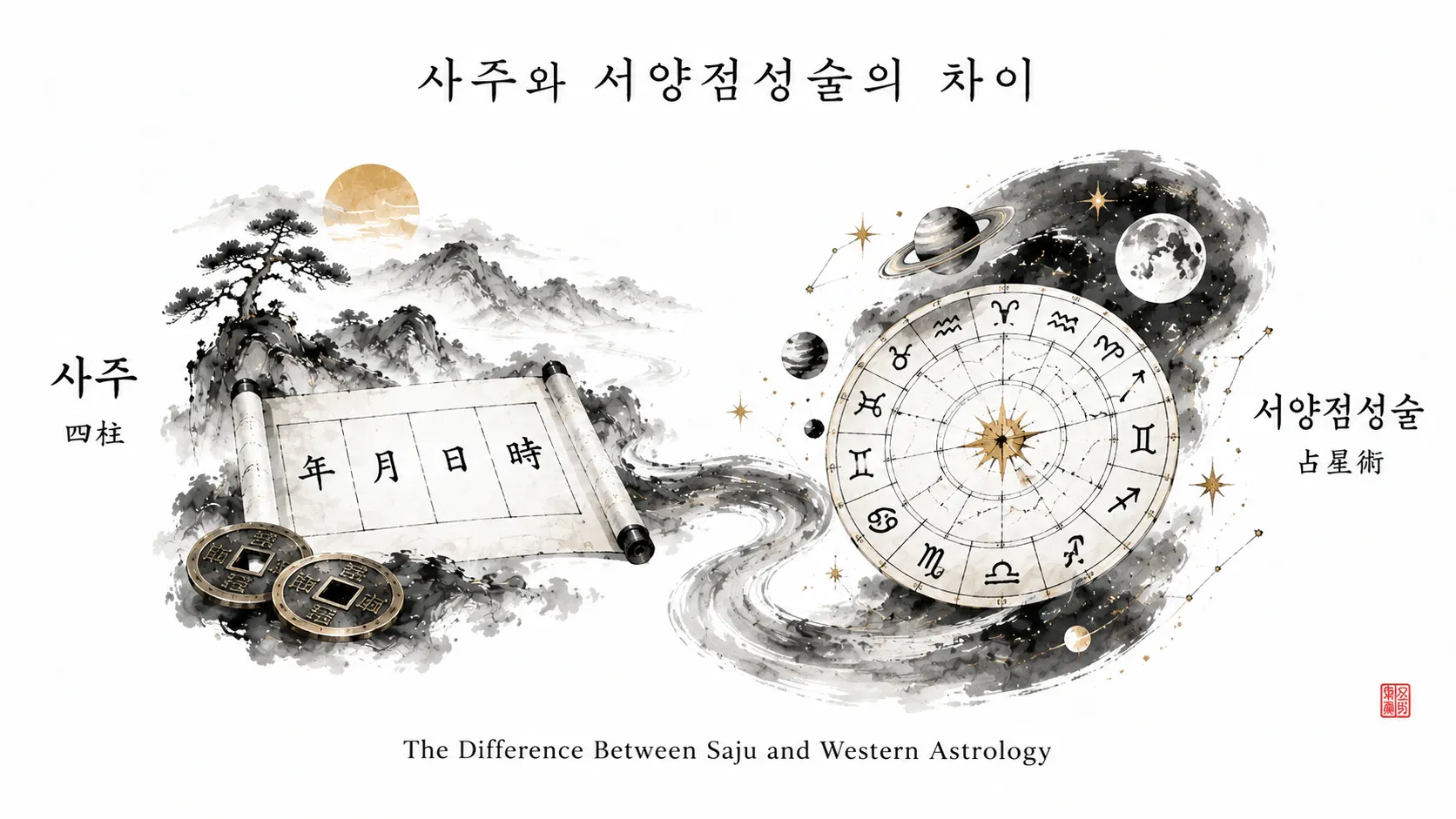
Humans have an innate instinct to explore and understand themselves and the world around them. In this pursuit, the Eastern tradition of Four Pillars and Western astrology have emerged as powerful tools for self-discovery, each evolving within its distinct cultural framework. While both systems seek to explore human personality and destiny, they differ fundamentally in their underlying philosophies, analytical methods, and interpretative perspectives.
Four Pillars and Western astrology share the common goal of analyzing the cosmic energies present at the moment of an individual’s birth to gain insight into their unique character and the flow of their life. However, because these two systems originated from different cultural and philosophical backgrounds, they differ fundamentally in how they collect and interpret data. Understanding these distinctions is essential to grasping the depth of each system and avoiding unnecessary misconceptions.
In this article, we will explore the different paths taken by Four Pillars and Western astrology, and examine how these differences influence their practical interpretations. We will move beyond a simple comparison to understand the background and logic driving each system.
The first step to understanding the gap between Four Pillars and Western astrology is to examine their respective philosophical foundations, which serve as the starting point for all their analytical methods.
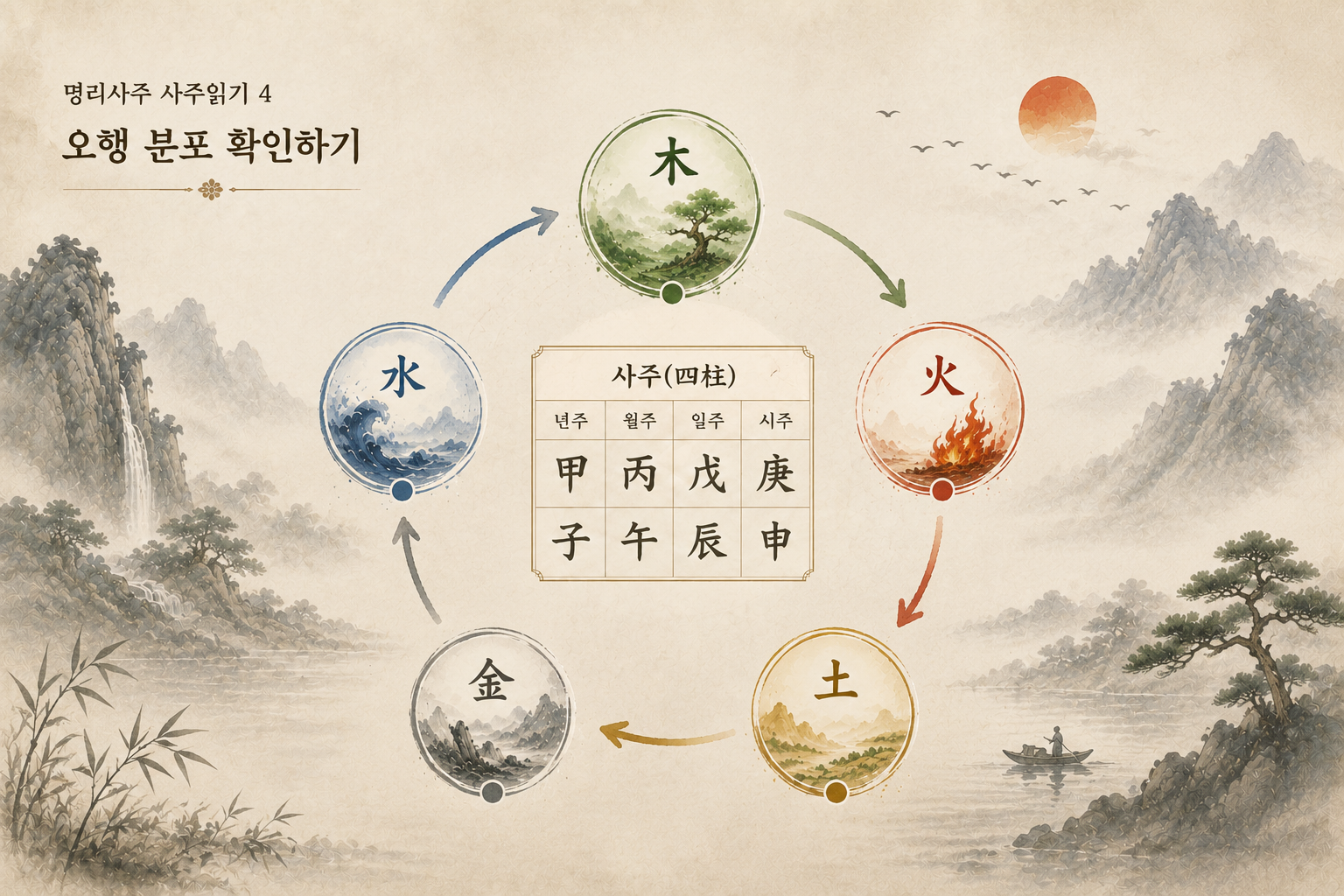
Four Pillars is rooted in the philosophy of Yin-Yang and the Five Elements. Yin and Yang explain all phenomena in the world through two opposing yet complementary forces. The Five Elements—Wood element, Fire element, Earth element, Metal element, and Water element—describe the principles of creation and transformation through their relationships of generation and control in the Five Elements. Four Pillars represents an individual’s birth year, month, day, and time as a combination of these elements to identify the composition and flow of one’s innate energy.
From this perspective, Four Pillars does not advocate for a fixed destiny but rather emphasizes the balance and harmony of energy, which, like the cycles of nature, is in constant flux. By predicting outcomes when certain energies are strong, weak, or in conflict, it provides wisdom on how an individual can adjust their life path and find equilibrium. Seeking a life of harmony by complying with the laws of nature is a crucial aspect of Four Pillars philosophy.
Western astrology is based on astronomical observations and mythological symbol systems developed in ancient Babylonia and Greco-Roman civilizations. It operates on the belief that the planets of the solar system and constellations influence human life and personality, with each planet and constellation representing specific meanings and energies. For instance, the Sun symbolizes ego and will, the Moon represents emotions and the subconscious, and Mars signifies action and energy.
Western astrology analyzes a ‘Natal Chart,’ a map reflecting the precise positions of celestial bodies at the moment of birth. This chart symbolically represents an individual’s innate personality, talents, potential, and the challenges or opportunities they may encounter. If Four Pillars focuses on the flow and balance of energy, Western astrology tends to focus on understanding individual psychological structures and life patterns through fixed symbols and archetypal energies.
Although both systems utilize information from the exact moment of birth, they diverge significantly in how they organize and interpret that data, highlighting what each system values most.
Four Pillars uses four temporal data points—year, month, day, and time—as ‘pillars.’ Each pillar is expressed using the stem-branch cycle, which is a combination of Heavenly Stems and Earthly Branches. These eight characters make up an individual’s Four Pillars. For example, it might be expressed as a Jia-Zi year, Bing-Yin month, Ding-Mao day, and Wu-Shen hour. Notably, the place of birth is not considered.
Each pillar represents a specific aspect of a person’s life: the year pillar for ancestors or nation, the month for parents or society, the day for the self and spouse, and the hour for children or later life. The stem-branch cycle follows the 60-year sexagenary cycle, providing clues on how energy changes over time. Four Pillars reads the flow of destiny through the interaction of these eight characters and the dynamic interplay of the Five Elements.
Western astrology requires more precise information than Four Pillars. Beyond the birth date and time, one must know the exact location of birth (latitude and longitude). Based on this, a natal chart is calculated to show the zodiac signs and houses where the planets (Sun, Moon, Mercury, Venus, Mars, Jupiter, Saturn, Uranus, Neptune, Pluto) were positioned as viewed from Earth.
The natal chart is a circular diagram that details the positions of planets, the angles (aspects) between them, and the zodiac signs covering the 12 houses. This provides in-depth information on personality, potential, and life areas such as career, relationships, and finance. Location is crucial because Earth’s rotation means that even for people born at the same time, different latitudes and longitudes result in different house placements.
Just as they differ in data collection, the two systems also have distinct ways of interpreting information and applying it to life.
Interpretation in Four Pillars centers on ‘harmony and balance.’ It examines the balance of the Five Elements within the eight characters of the Four Pillars and diagnoses potential issues when certain elements are too dominant or deficient. For example, excessive Fire element might suggest a hasty temperament or health concerns, while a lack of Water element might suggest a lack of flexibility.
Consultations focus on suggesting ways to resolve these imbalances. By offering advice on surrounding oneself with specific colors, choosing certain careers, or adjusting relationships, it aims to help individuals lead smoother, happier lives. Four Pillars provides practical guidance for navigating the constantly shifting tides of luck.
Western astrology focuses on an in-depth analysis of innate personality, temperament, talents, and life potential through the natal chart. It interprets the composite of planetary placements, house positions, and aspects (the angles between planets) to understand complex psychological structures and behavioral patterns.
For example, the Sun in Leo indicates a strong ego and leadership, while the Moon in Cancer suggests a delicate and emotional nature. Furthermore, positive aspects between planets denote talents and smooth paths, while challenging aspects suggest hurdles to overcome. Western astrology is used as a tool for self-understanding, helping individuals recognize their strengths and weaknesses to reach their full potential and find their life purpose.
There are several common misconceptions regarding both Four Pillars and Western astrology that must be addressed for an accurate understanding.
One of the most frequent misconceptions is that these systems ‘determine’ fate. Many believe their future is already written or that certain events are guaranteed to happen at specific times. However, this misunderstands their essence.
Four Pillars and Western astrology act as ‘maps’ showing an individual’s innate energy composition and potential tendencies. While these maps inform us of possible paths, obstacles, and resources, the ultimate choices and how we overcome challenges depend entirely on ‘free will.’ They are ‘guidebooks’ to better understand and navigate one’s life, not pre-determined scripts.
Another misconception is dismissing these systems as mere ‘fortune-telling.’ While they do predict trends, their depth and complexity far exceed simple prophecy. Four Pillars embodies the essence of thousands of years of Eastern philosophy, while Western astrology is a vast discipline combining ancient astronomy, mythology, and psychological insight.
They are used to analyze various aspects of life, such as personality, interpersonal relationships, career aptitude, and health. Beyond just ‘good or bad fortune,’ they are intricate systems that help individuals explore their essence and find meaning. Viewing them only as superficial fortune-telling ignores their true value.
In this article, we explored the fundamental differences between Four Pillars and Western astrology through their philosophical backgrounds, data utilization, and interpretative perspectives. In our next article, we will delve deeper into the core components of these two systems. We will explain the meaning and composition of the ‘Four Pillars’ in Four Pillars and detail the elements and symbols of the ‘Natal Chart’ in Western astrology. Understanding how each system converts personal information into ‘data’ will help you better grasp the depth of their interpretations.