This is the first article in the Saju reading series. It establishes the criteria for the correct sequence to interpret the Four Pillars and serves as the starting point for all subsequent analysis.
Saju Reading: It’s About Sequence, Not Concepts
When first encountering the Four Pillars (the Four Pillars), most people try to interpret individual characters or a single Ten Gods (Sibsin).
However, the essence of Saju reading is not about understanding concepts, but about knowing the correct sequence of judgment.
Without a proper sequence, interpretations will conflict rather than build upon each other.
Therefore, the initial step is not interpretation, but establishing a clear standard.
Why Deviating from the Sequence Leads to Errors
Each element of the Four Pillars is interconnected.
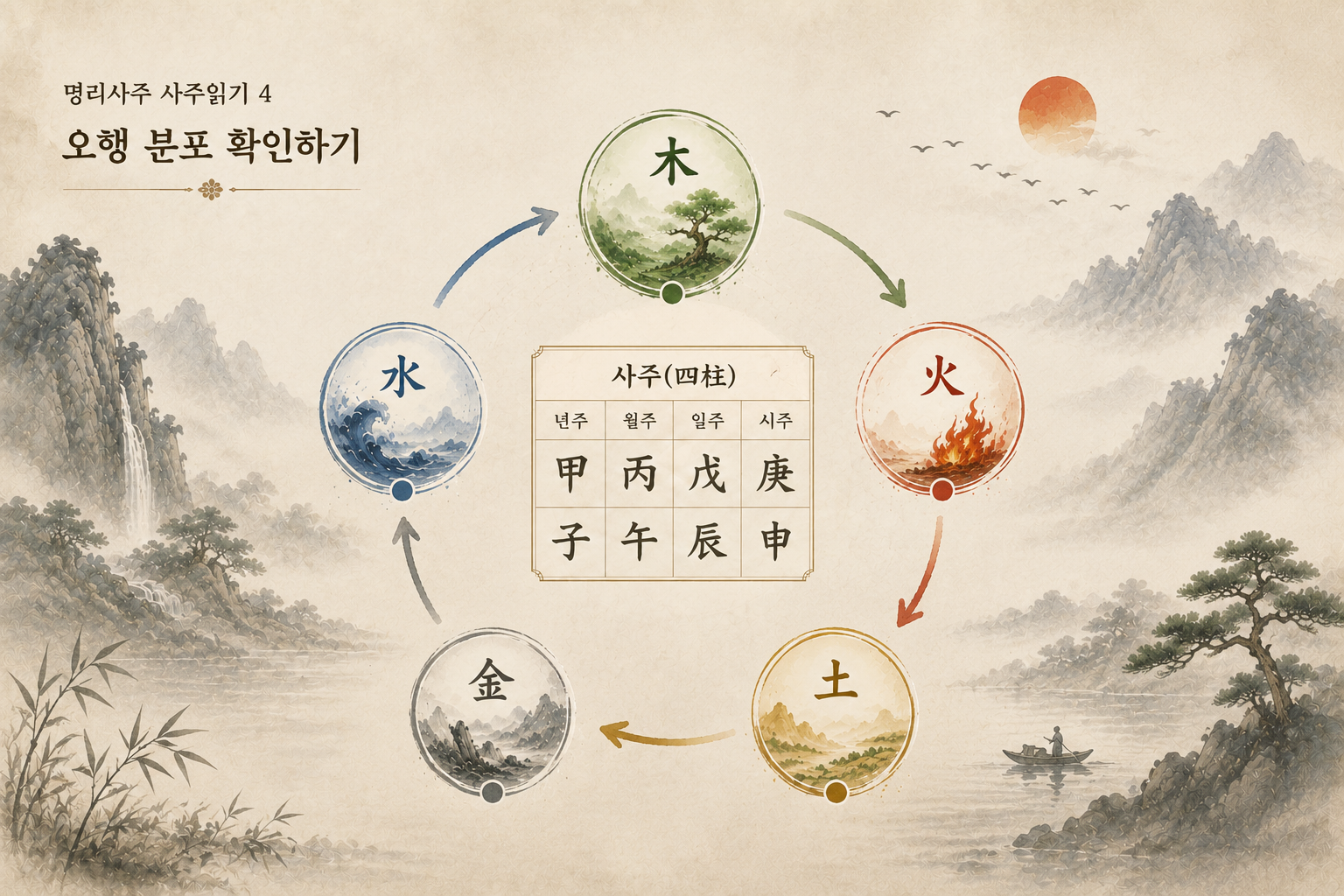
The Day Master (Ilgan) is influenced by the Monthly Branch (Wolji) environment, and the Five Elements (Ohhaeng) change meaning based on their position and relationships.
However, interpreting based on just one element will inevitably conflict with subsequent information.
This is the most common mistake beginners make.
The Overall Structural Flow for Reading the Four Pillars
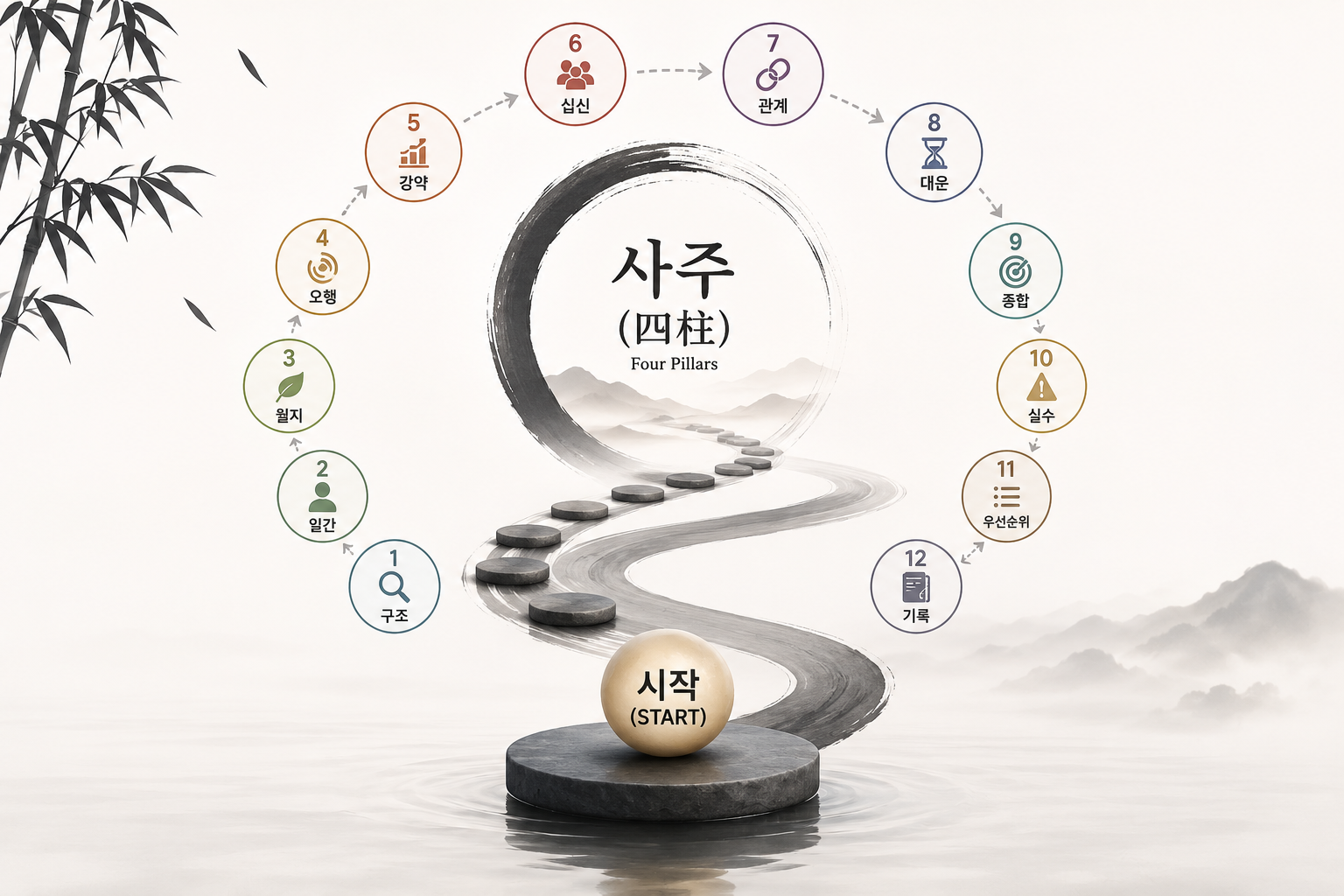
Saju reading follows a specific sequence, which acts as both the interpretation order and a guiding standard. The steps are:
- Overall Structure Confirmation
- Ilgan
- Wolji
- Ohhaeng
- Strength/Weakness
- Sibsin
- Combinations, Clashes, Punishments, and Harms (Hapchung-hyeongpa-hae)
- Great Luck Cycles (Daeun)
- Synthesis
- Error Review
- Prioritization
- Recording
Purpose and Checking Points for the Current Stage
The goal at this stage is not interpretation.
It is to accurately grasp the structure of the Fate Chart (Myeongshik).
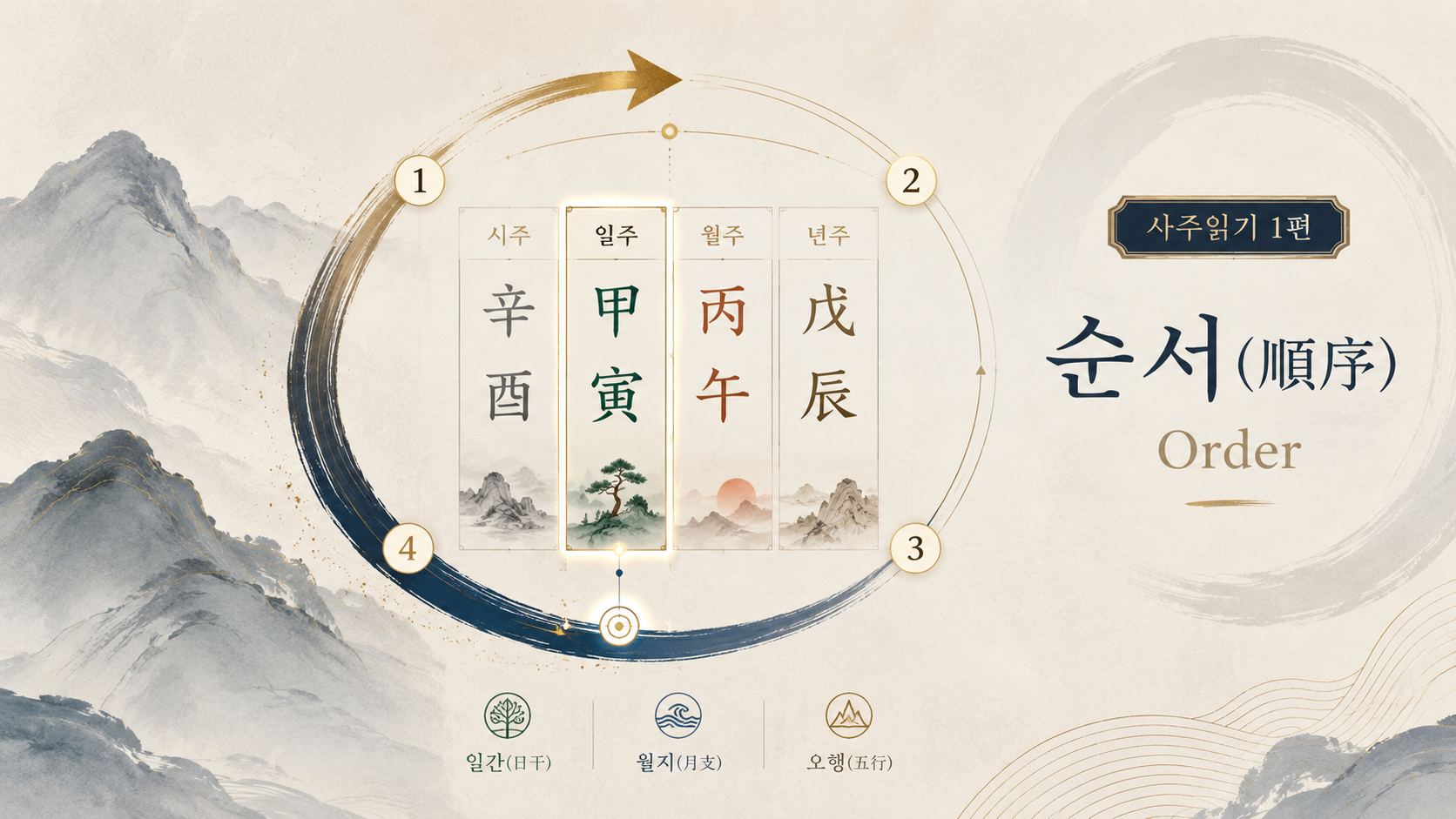
| Item to Check | Location | Purpose |
| The Four Pillars | Year, Month, Day, and Hour Pillars | Grasping the overall structure |
| Heavenly Stems/Earthly Branches (Cheongan/Jiji) | Top/Bottom of each pillar | Distinguishing structure |
| Ilgan | Heavenly Stem of the Day Pillar | Preparing criteria for the next stage |
| Wolji | Earthly Branch of the Month Pillar | Securing environmental checking point |
At this stage, you should not begin interpreting meanings.
Criteria for Judgment
There is only one criterion for judgment at this stage.
“How far have I checked?”
- Have you accurately identified the structure?
- Have you found the Ilgan?
- Have you found the Wolji?
- Have you avoided making judgments based on unchecked elements?
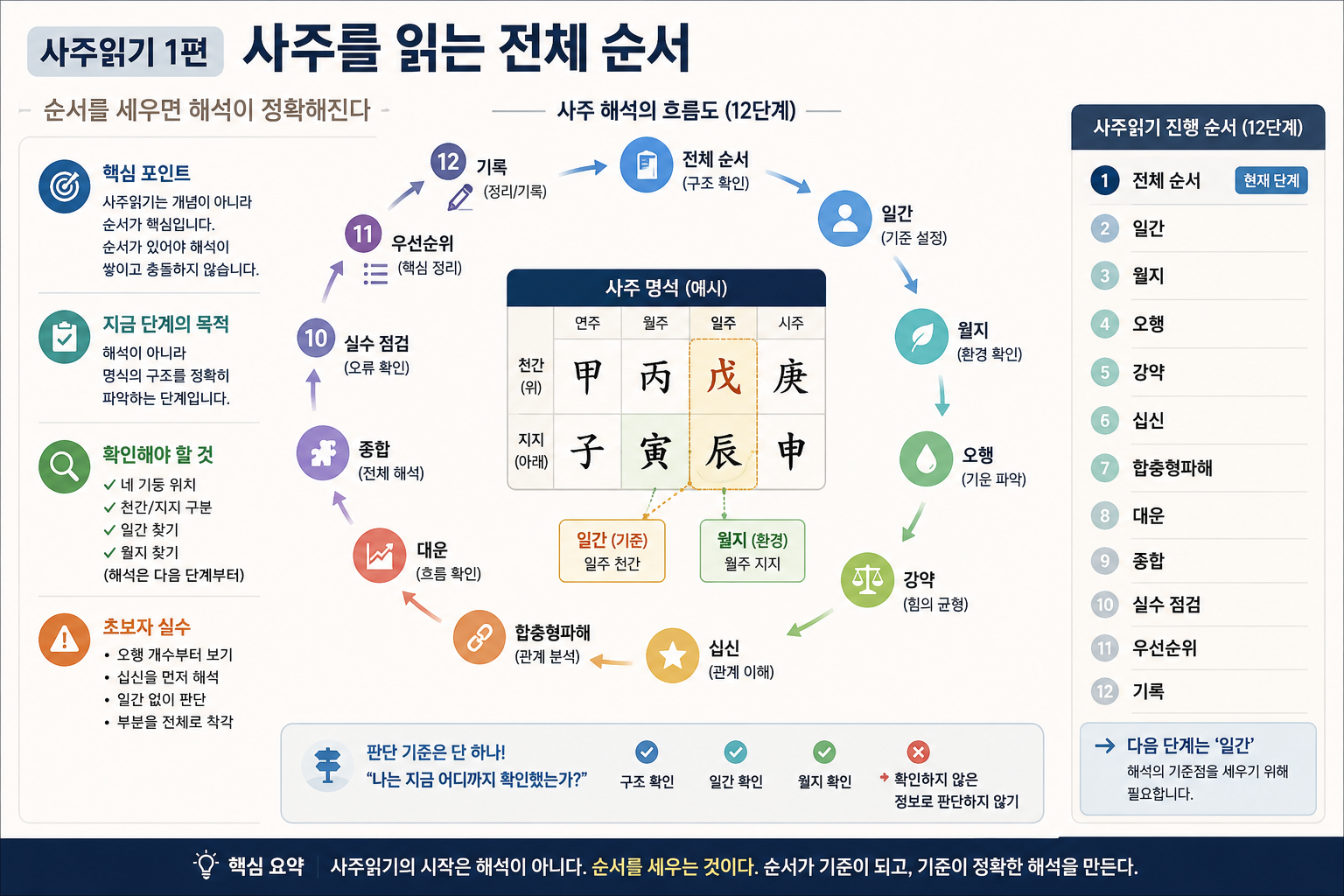
Try It Yourself
Open a Myeongshik now.
And without interpreting, only confirm the following:
- Confirm the positions of the four pillars.
- Distinguish Cheongan and Jiji.
- Find the Ilgan.
- Find the Wolji.
Interpreting now will lead to errors.
Common Beginner Mistakes
- Starting by counting the number of Ohhaeng.
- Interpreting Sibsin first.
- Making judgments without identifying the Ilgan.
- Mistaking a part for the whole.
All these mistakes are interconnected.
They stem from disregarding the proper sequence.
Why Ilgan is the Next Step
Once you have confirmed the structure, you need a criterion.
That criterion is the Ilgan.
Without the Ilgan, neither the Ohhaeng nor the Sibsin can hold meaning.
Key Summary
The beginning of Saju reading is not interpretation.
It is about establishing the sequence.
━━━━━━━━━━━━━━━━━━
Saju Reading Progress Sequence
- Overall Sequence — Current Stage
- Ilgan
- Wolji
- Ohhaeng
- Strength/Weakness
- Sibsin
- Hapchung-hyeongpa-hae
- Daeun
- Synthesis
- Error Review
- Prioritization
- Recording
━━━━━━━━━━━━━━━━━━
Current Stage: 1/12
Next Stage: Ilgan — Necessary for establishing the interpretation benchmark.