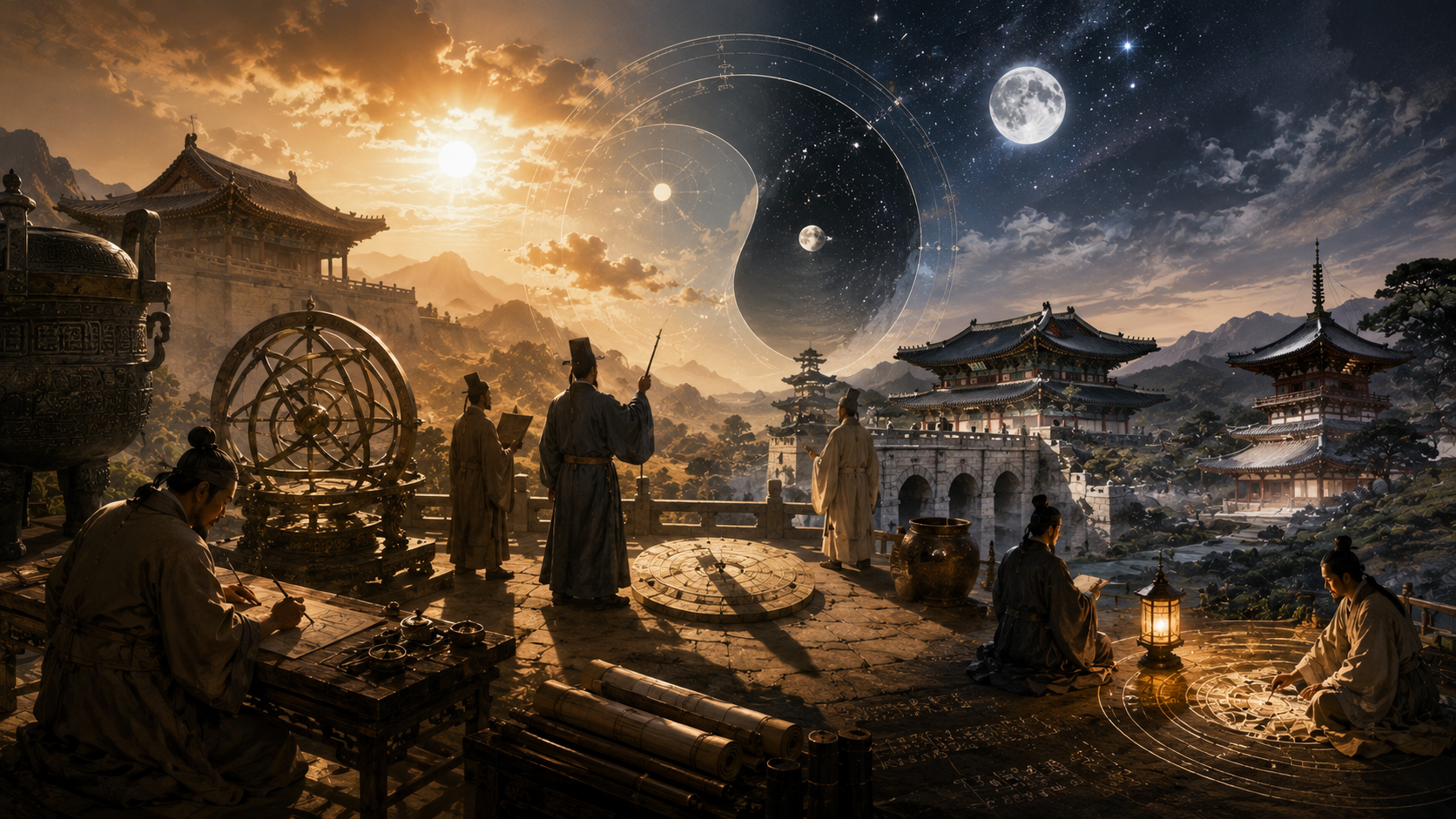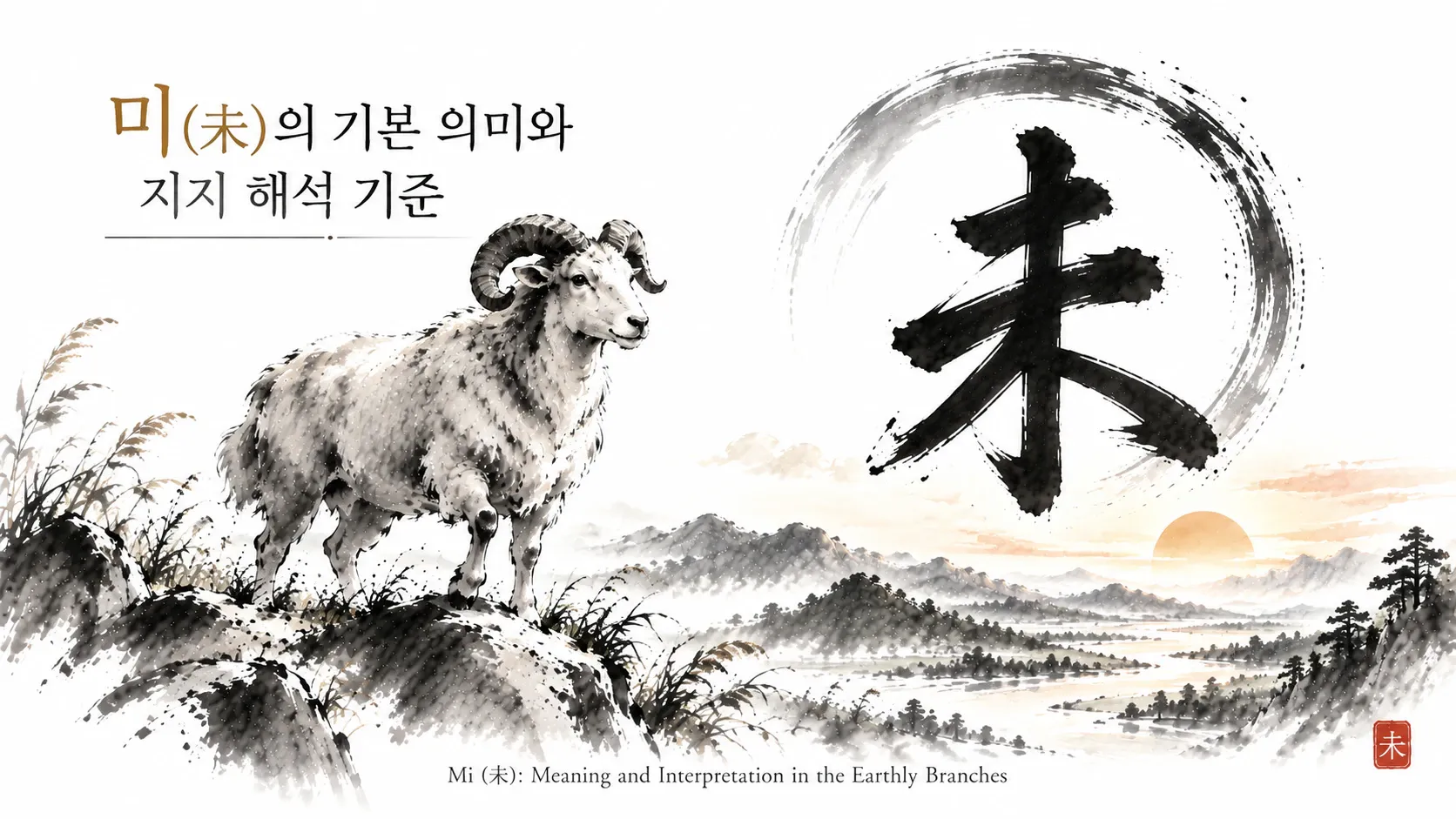
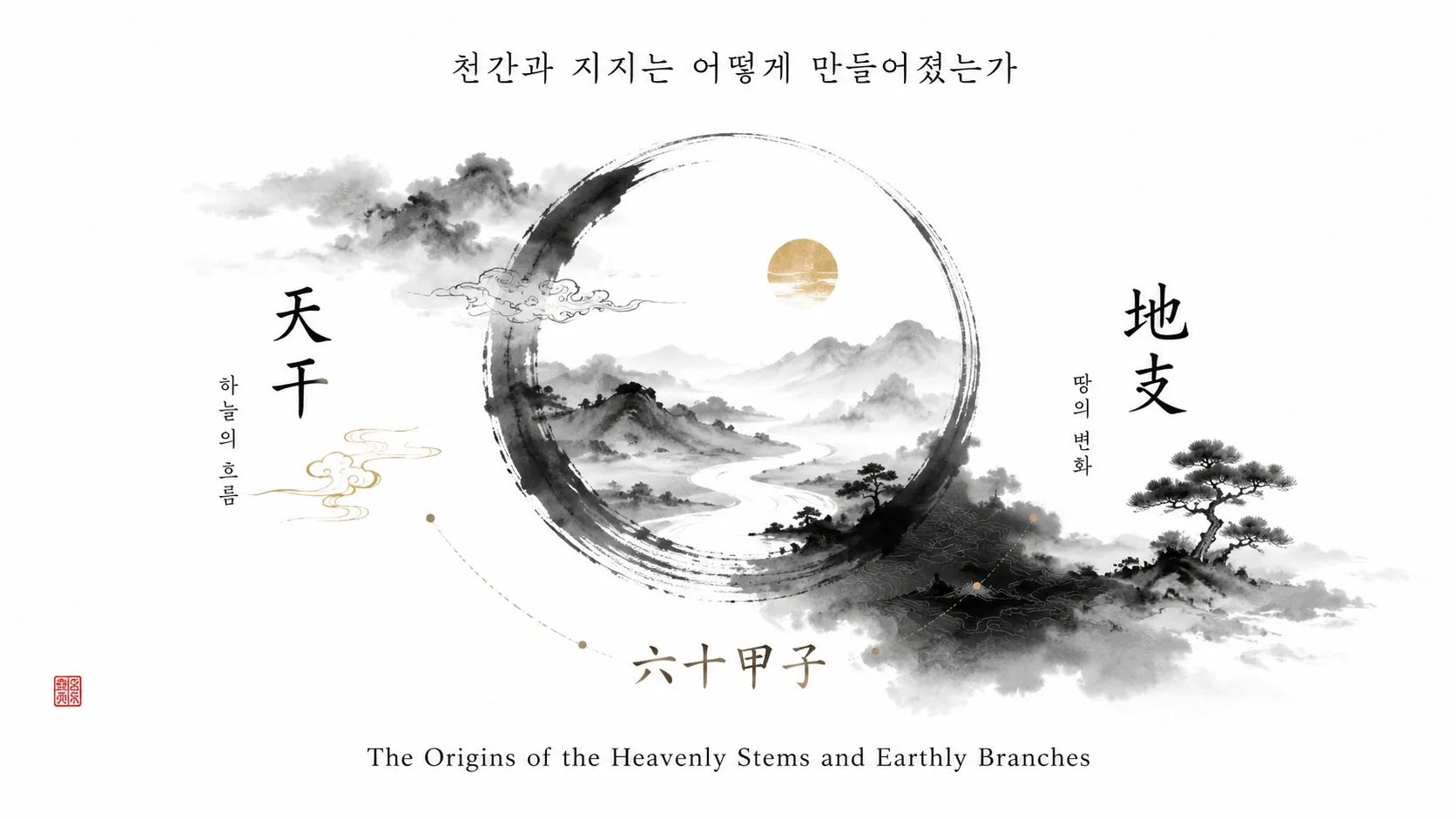
The Heavenly Stems and Earthly Branches are core concepts in East Asian fortune-telling culture, symbolizing the flow of time and space. More than mere symbolic systems, they encapsulate the cosmological views and natural philosophy of ancient East Asians. This article explores their historical background and meaning, examining how they were formed and developed.
Heavenly Stems and Earthly Branches are fundamental elements representing the concepts of time and space in East Asia. These two systems are deeply embedded not only in Four Pillars theory but also in history, culture, and even daily life. This article delves into the origins and significance of the Heavenly Stems and Earthly Branches, exploring what they are and how they came to be.
The origins of the Heavenly Stems and Earthly Branches can be traced back to ancient Chinese agricultural societies. To accurately understand the passage of time and seasonal changes, which were crucial for farming, people began observing and recording celestial movements (Heavenly Stems) and earthly transformations (Earthly Branches). Initially, these systems developed independently but gradually combined to form the Sexagenary Cycle (Yukgapja, 六十甲子), a complex chronological system.
As the concepts of Heavenly Stems and Earthly Branches spread throughout East Asia, they evolved into various forms, integrating with the distinct cultural characteristics of each region. In countries like Korea, China, and Japan, they were commonly used as a basic framework for denoting time and direction. However, certain cultures developed unique interpretations and applications, utilizing them in divination, rituals, and even artistic fields. For instance, in China, they were deeply linked to imperial calendars and governing ideologies, while in Korea, they were widely applied in folk beliefs and Feng Shui principles.
The concepts and applications of the Heavenly Stems and Earthly Branches have evolved over time with societal changes. Initially, they served as purely chronological and directional systems. However, by integrating with the philosophy of Yin-Yang and the Five Elements (Eumyangohaeng), they expanded into a philosophical tool explaining all cosmic phenomena. This evolution not only broadened their conceptual scope but also led to their establishment as a core theory within Four Pillars theory, used to predict human destiny and fortune.
In contemporary times, the Heavenly Stems and Earthly Branches continue to hold significant meaning in East Asian cultures. Beyond traditional fortune-telling interpretations, their principles are applied in the ‘띠’ (animal zodiac) culture that characterizes specific years, in historical chronicles, and even in fields like architecture and design. This demonstrates that the Heavenly Stems and Earthly Branches are not merely relics of the past but a living cultural heritage interwoven into modern life.
The Heavenly Stems and Earthly Branches are often misunderstood as purely superstitious or overly complex concepts. However, they are the product of ancient people’s scientific and philosophical efforts to comprehend and bring order to nature. It is crucial to understand that they are not merely tools for predicting fortune, but rather embody the profound wisdom of East Asian philosophy in exploring the relationship between the cosmos and humanity.
In the next article, we will delve into how the culture of the Twelve Zodiacal Deities (Sibijisin), derived from the Earthly Branches, spread throughout East Asian countries.