In East Asian cultures, the zodiac animal, or 'tti', has evolved beyond simply indicating the year of birth, becoming a crucial cultural element that shapes people's relationships and identities. This zodiac animal culture, linked to the Twelve Earthly Branches animals, has developed uniquely within the historical and social contexts of various regions, including Korea, China, and Japan. This article will explore in depth how zodiac animal culture spread across East Asia and how it transformed in each region to become what it is today.
Zodiac animal culture is a unique East Asian cultural phenomenon that assigns a specific animal to the year of birth, thereby shaping individual identity and social relationships. This culture, connected to the Twelve Earthly Branches (Sibijisin) animals, extends beyond a mere way of counting age. It is deeply ingrained in the lives of East Asians, widely used to discuss people’s personalities and fortunes. In Korea, terms like ‘ttidonggap’ (people sharing the same zodiac animal) serve as a basis for forming intimate relationships. In China, it holds practical significance, often consulted when choosing marriage partners or business associates. Thus, zodiac animal culture has evolved in various forms, adapting to the unique characteristics of each region.
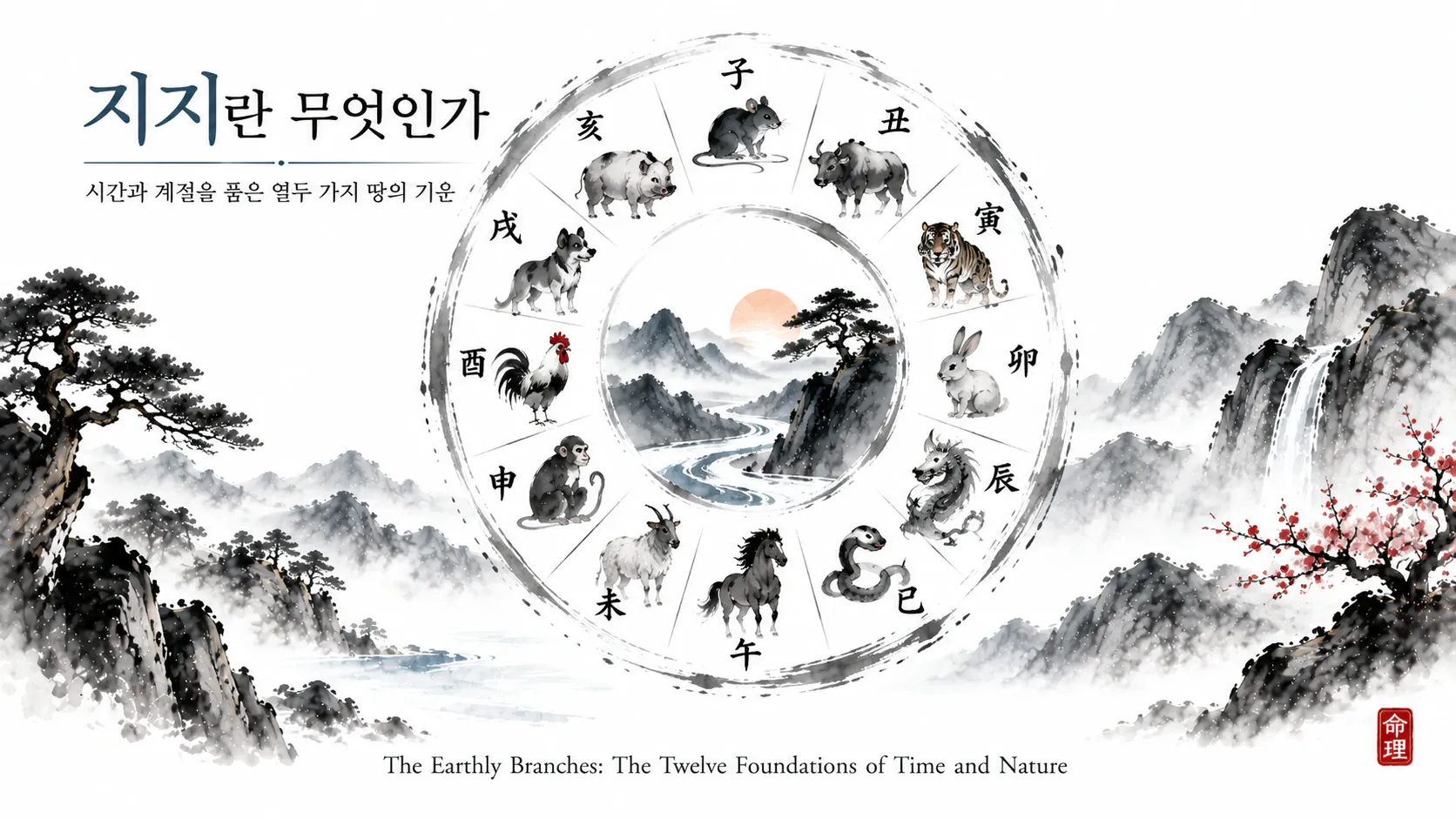
The origins of zodiac animal culture can be traced back to the ancient Chinese sexagenary cycle, known as the Yukgapja (六十甲子) system. This system calculates time in 60-year cycles by combining 10 Heavenly Stems and 12 Earthly Branches. The Twelve Earthly Branches (子,丑,寅,卯,辰,巳,午,未,申,酉,戌,亥) within this system were each assigned one of twelve animals—rat, ox, tiger, rabbit, dragon, snake, horse, sheep, monkey, rooster, dog, and pig—forming the Sibijisin (Twelve Zodiac Animals). It is believed that animals were associated with the originally abstract concepts of the Earthly Branches, which represented time and direction, to help the general public easily understand and remember the complex system.
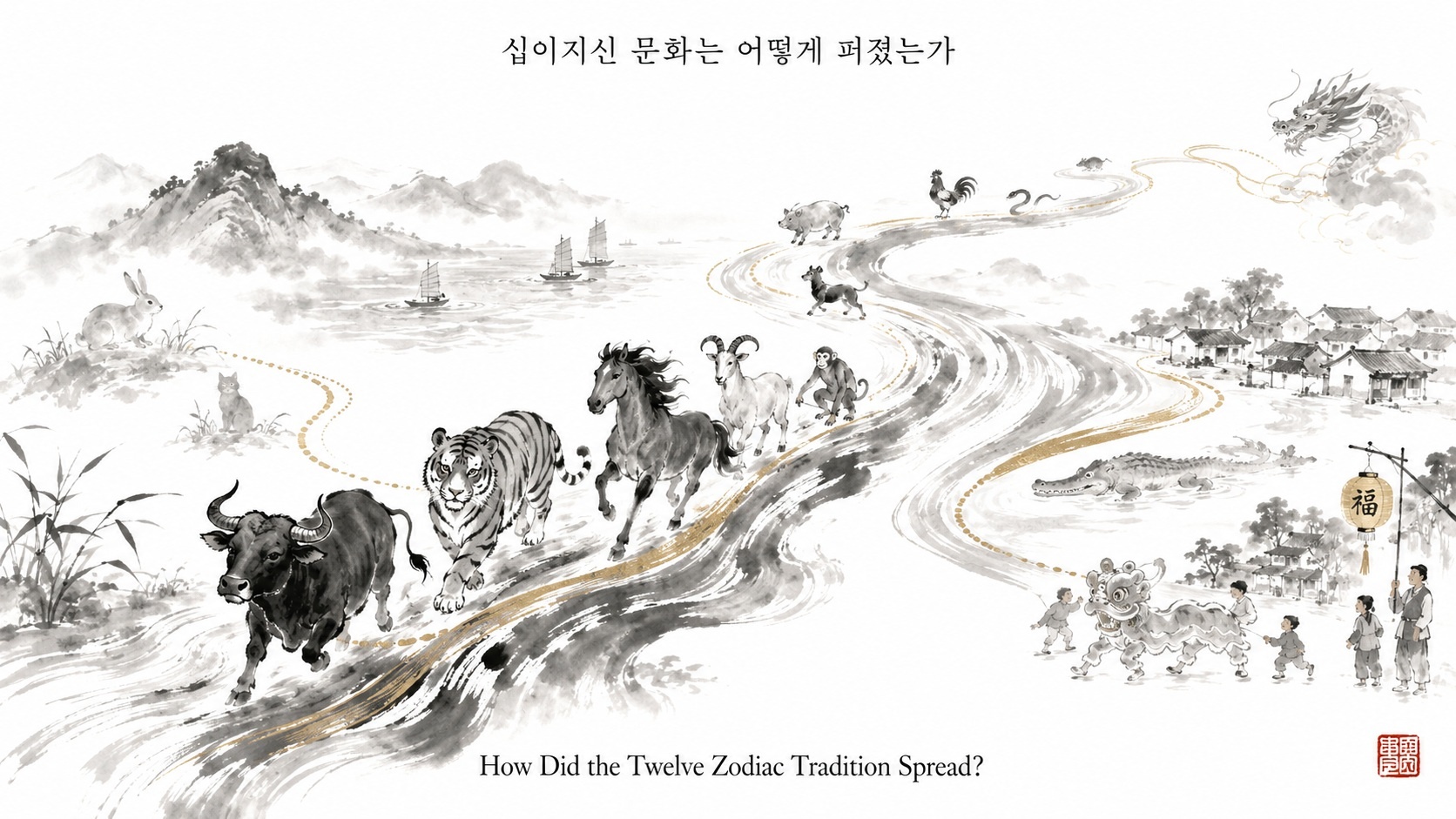
This Sibijisin concept is also deeply connected to the characteristics of agricultural societies. Ancient peoples observed the cycles of nature and animal ecology to perceive the passage of time. By attributing the symbolism of specific animals to the Earthly Branches, they sought to connect natural phenomena with human life. For example, the rat signals the beginning of night and symbolizes strong fertility, while the ox represents diligence. The characteristics of each animal were thus used as metaphors for time, direction, and human destiny. This Sibijisin culture subsequently spread throughout East Asia via the Silk Road and maritime trade routes, beginning to merge with the unique cultures of each region.
As zodiac animal culture spread to various East Asian countries, it transformed into diverse forms within each region’s unique cultural context. Not only did the types of animals change, but the way the zodiac functions in society and its meaning also varied from region to region.
In Korea, the zodiac animal (tti) serves as an important criterion for determining age and an intimate medium for forming relationships. The term ‘ttidonggap’ refers to people who share the same zodiac animal, who tend to feel a special bond and become friends easily. Furthermore, common personality analogies associated with each zodiac animal (e.g., those born in the year of the Tiger are brave, those in the year of the Rabbit are gentle) are frequently used in daily conversations, adding a playful element to describing individual characteristics. This trend leans more towards utilizing the popular and approachable image of the zodiac animal rather than a deep analysis of the entire Four Pillars system.
In China, the zodiac animal (生肖, shēngxiào) is used in a more practical and astrological sense than in Korea. It is common to consider the generating cycle and overcoming cycle relationships of zodiac animals when assessing compatibility for marriage or selecting business partners. Moreover, birth rates can fluctuate due to the belief that children born in certain zodiac years (e.g., the Year of the Dragon) will have better fortunes. This reflects a strong view that the zodiac directly influences an individual’s luck and misfortune.
In Japan, the zodiac animal is called Eto (干支, えと) and primarily holds cultural symbolic meaning, used in New Year’s greetings, postcards, and souvenirs. Unlike Korea or China, where it is deeply connected to personal personality or fortune, its significance as a symbol for the year is more emphasized. Interestingly, some of the Japanese zodiac animals differ from those in other regions. For example, the wild boar (亥) is often used instead of the pig, and the sheep (未) can be interpreted as a goat, sheep, or even a deer. This is a result of Japan’s geographical environment and cultural characteristics.
Zodiac animal culture also exists in some Southeast Asian regions, such as Vietnam, but it may include different animals from the Chinese Twelve Earthly Branches. For instance, in Vietnam, the cat replaces the rabbit, and the water buffalo replaces the ox, incorporating animals closely tied to the local ecology into their zodiac. This demonstrates how zodiac animal culture flexibly adapted to the unique environments and lifestyles of each region during its transmission.
The primary reason for the regional variations in zodiac animal culture lies in each area’s unique cultural, geographical, and historical contexts. The symbolism and importance of specific animals differed across regions, allowing for changes in the types of animals included in the Sibijisin and their associated meanings. For example, the replacement of the pig with the wild boar in Japan occurred because the wild boar was a more common and symbolic animal in Japan’s natural environment. Furthermore, differences in societal attitudes towards fortune, misfortune, and belief systems also influenced how zodiac animal culture was utilized.
The integration of religious and philosophical ideas also played a significant role. East Asian philosophies such as Buddhism and Taoism profoundly influenced the interpretation and meaning of zodiac animal culture. For instance, Buddhist concepts of reincarnation or Taoist Yin-Yang and Five Elements theories were used to explain the generating cycle and overcoming cycle relationships among zodiac animals, imbuing the culture with profound meanings beyond a simple time-keeping method. These complex factors collectively led East Asian countries to reinterpret and develop zodiac animal culture in their own distinct ways.
Even in modern society, zodiac animal culture continues to hold significant cultural meaning. Rather than being seen as something that solely determines destiny, it is increasingly used as an interesting means to foster social bonds and express individual identity.
Social Connection: The concept of ‘ttidonggap’ helps reduce awkwardness and build rapport with new acquaintances. The sight of people with the same zodiac animal forming groups or encouraging each other demonstrates that zodiac animal culture still serves as a powerful social connector in contemporary society.
Individual Identity and Symbolism: Many people feel an attachment to their zodiac animal and connect its symbolic meaning to their personality or destiny. This acts as an interesting element in forming individual identity and sometimes leads to consumer behavior, such as purchasing products featuring their specific zodiac animal.
Commercial Use and Cultural Content: The annually changing zodiac provides material for various commercial products, including New Year’s merchandise, character goods, and commemorative coins. Furthermore, zodiac animals frequently appear as main characters in cultural content like fairy tales, animations, and films, making them familiar to the public.
Connection to Fortune-telling Culture: In Saju Palja, the Four Pillars and Eight Characters, the zodiac animal corresponds to the Earthly Branches of the year pillar (Nyeonju), which is one of the eight characters that make up a Four Pillars. While one cannot judge everything based solely on the zodiac animal, it plays an important role in interpreting the entire Four Pillars system. It is also one of the first pieces of information beginners encounter when learning about Four Pillars.
Despite its long history and widespread influence, several misconceptions surround zodiac animal culture. Correcting these misunderstandings can help us understand the culture more fully.
Misconception that the zodiac animal solely determines personality or destiny: The zodiac animal represents only one of the eight characters in Four Pillars. In Four Pillars theory, a person’s destiny is comprehensively interpreted by considering not only the year pillar (Earthly Branches) but also the month pillar, day pillar, hour pillar, the combination of Heavenly Stems, and the flow of daeun (great luck cycles) and seun (annual luck cycles). Therefore, judging an individual’s personality or destiny based solely on their zodiac animal is a very superficial approach.
Blind faith in zodiac compatibility: Zodiac compatibility notions like ‘Rats and Horses are incompatible’ or ‘Dragons and Roosters are compatible’ are widely known, but from a Four Pillars theory perspective, this is a highly simplified view. Actual compatibility requires a complex analysis of the harmony of the Five Elements and the presence or absence of Shinsal symbolic stars across both individuals’ entire Four Pillars. Relying solely on zodiac animals for compatibility is superficial and does not accurately reflect the complexity of relationships.
Tendency to dismiss it as superstition: There is also a tendency to dismiss zodiac animal culture as mere unscientific superstition. While it is true that the zodiac is not scientifically proven, it is a unique cultural symbolic system and a tool for social communication that has been shaped over centuries alongside the lives of East Asian people. Instead of viewing zodiac animal culture merely as superstition, an effort is needed to understand its historical and cultural significance.
Thus, zodiac animal culture is not simply a superstition but an important cultural heritage deeply rooted in the history, society, and lives of East Asian people. Understanding how zodiac animal culture has evolved and been interpreted differently according to the characteristics of each region will provide an excellent opportunity to glimpse the diversity and depth of East Asian culture.
In the next article, we will delve into Pungsu (風水), another crucial pillar of East Asian divination culture, and explore in depth how Pungsu connects and interacts with Four Pillars. Join us as we investigate how the energy of the land and human destiny harmonize.