The Day Master is often considered the most vital element in the Four Pillars of Destiny. Many people are tempted to define their entire personality or fate based solely on its characteristics. However, evaluating personality without considering the harmony and balance of the entire Four Pillars of Destiny is a risky approach. This article explores why relying only on the Day Master is insufficient and outlines the proper standards for interpreting the Four Pillars.
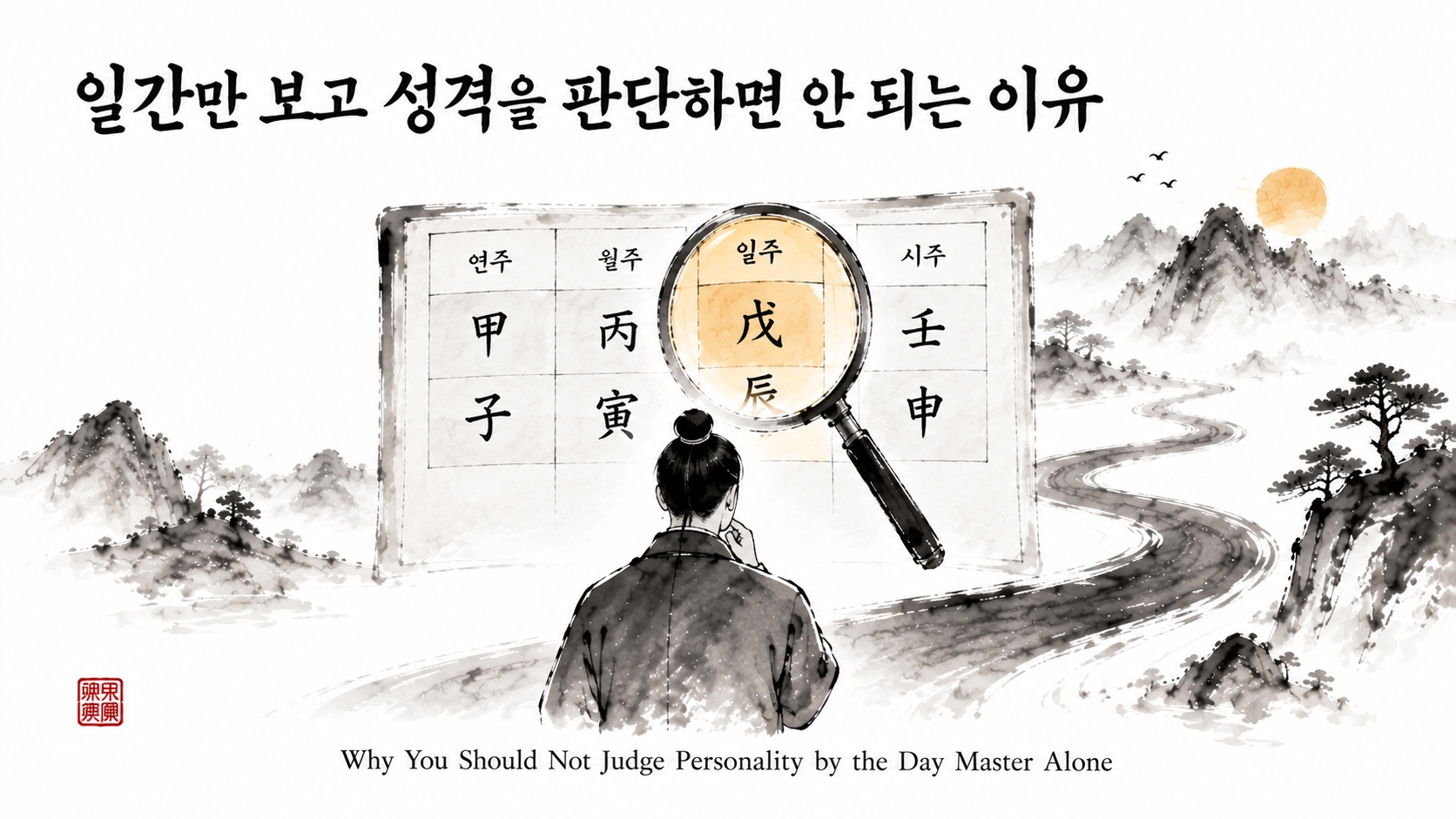
The Four Pillars of Destiny is composed of eight characters, derived from the year, month, day, and hour of birth, divided into Heavenly Stems and Earthly Branches. The Heavenly Stem of the birth day is called the Day Master, and it is considered the central energy representing the entire Four Pillars. It serves as the equivalent of the human head, acting as a core element that reflects an individual’s essential character and temperament.
The Day Master is categorized into ten Heavenly Stems, each possessing unique properties of the five elements (Wood, Fire, Earth, Metal, Water) and Yin-Yang attributes. For instance, Gap, the Yang Wood Heavenly Stem represents the nature of Yang Wood, while Eul, the Yin Wood Heavenly Stem represents the nature of Yin Wood. An individual’s personality, temperament, and inherent talents are explained based on these characteristics.
A common mistake for those new to Four Pillars of Destiny is concluding one’s destiny or personality based solely on the traits of the Day Master. For example, some learn that a person with a Bing Fire Day Master is inherently bright and passionate, or that an Im Water Day Master is wise. While the Day Master is a crucial element indicating basic tendencies, it cannot represent the entirety of a Four Pillars of Destiny interpretation.
The Four Pillars is not just a list of eight characters; it is an organic system where each character influences the others. Just as our body’s organs must work in harmony for good health, the Four Pillars depends on the balance of all energies. Even if a Day Master has excellent qualities, those traits may not be fully realized if they are suppressed or negatively influenced by surrounding characters. Conversely, a seemingly weak Day Master can produce positive results if it receives support and finds harmony with the rest of the chart.
So, what role does the Day Master play in a Four Pillars of Destiny analysis? It serves as a vital benchmark for identifying an individual’s essential temperament and innate potential. Much like a name, it is the most basic piece of information representing a person. By analyzing the element and Yin-Yang attributes of the Day Master, one can understand the framework of their basic personality.
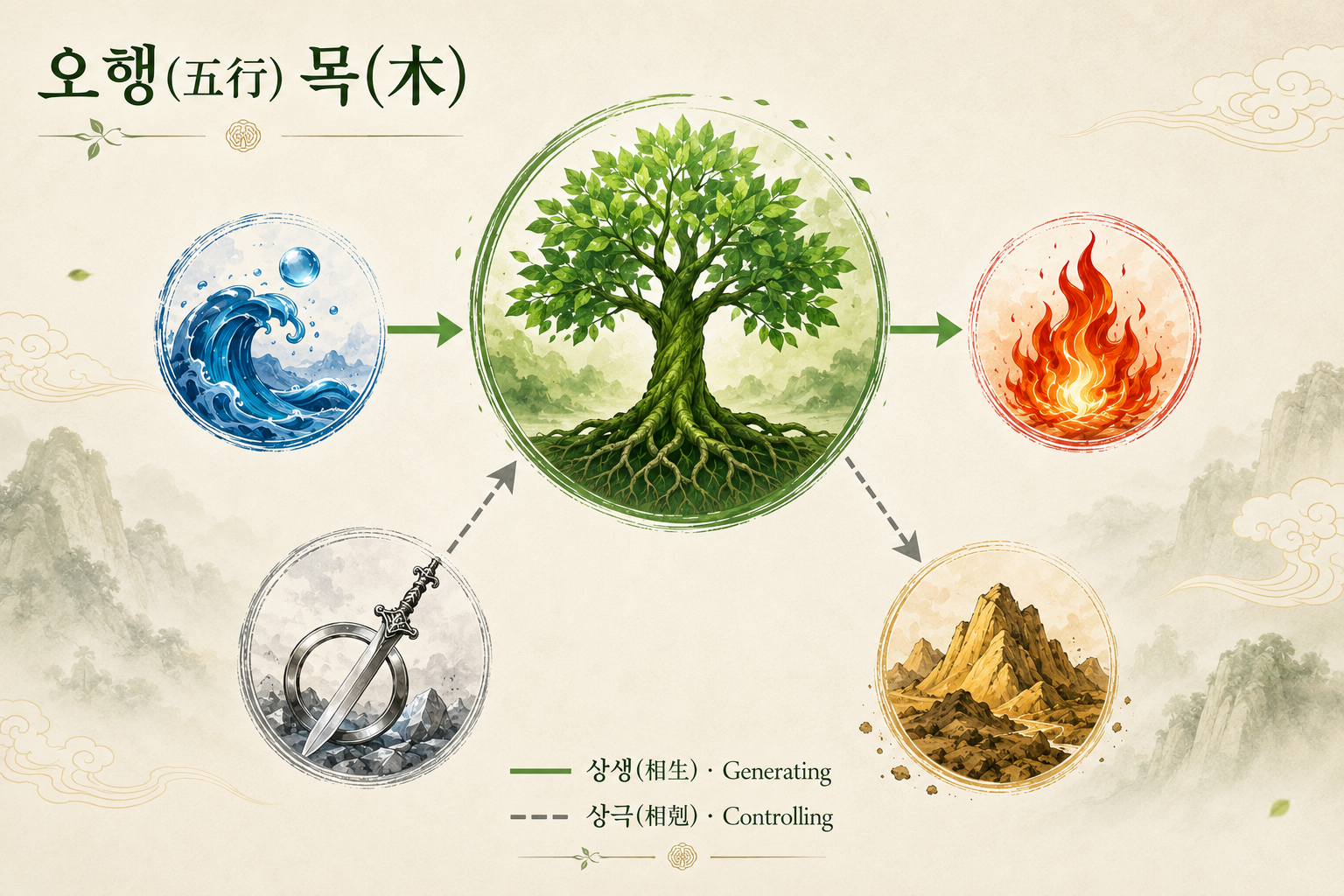
For example, a Day Master strong in Wood element energy tends to pursue growth, development, and flexibility, while one strong in Metal element energy may exhibit decisiveness, justice, and a sharp, disciplined nature. Additionally, Fire element energy symbolizes passion, expansion, and propriety; Water element energy represents wisdom, flow, and tolerance; and Earth element energy stands for mediation, stability, and trust. Understanding these basics is the starting point of any Four Pillars of Destiny analysis.
Once you understand that the Day Master alone cannot provide a complete picture, you must know what else to look for. In a Four Pillars of Destiny reading, there are essential elements that must be considered alongside the Day Master: the remaining seven characters that form the Four Pillars, specifically the other Heavenly Stems and the Earthly Branches. Examining the relationships between these characters and the Day Master is critical.
In particular, the Month Branch, which is the Earthly Branch of the birth month, plays a crucial role in Four Pillars of Destiny interpretation. It embodies the energy of the season and is most closely linked to the environment in which the Day Master was born. The Month Branch provides definitive clues for assessing the strength of the Day Master and the nuances of one’s character. It is also vital in determining the favorable and unfavorable energies. Therefore, after identifying the basic traits of the Day Master, one must always examine its relationship with the energy of the Month Branch.
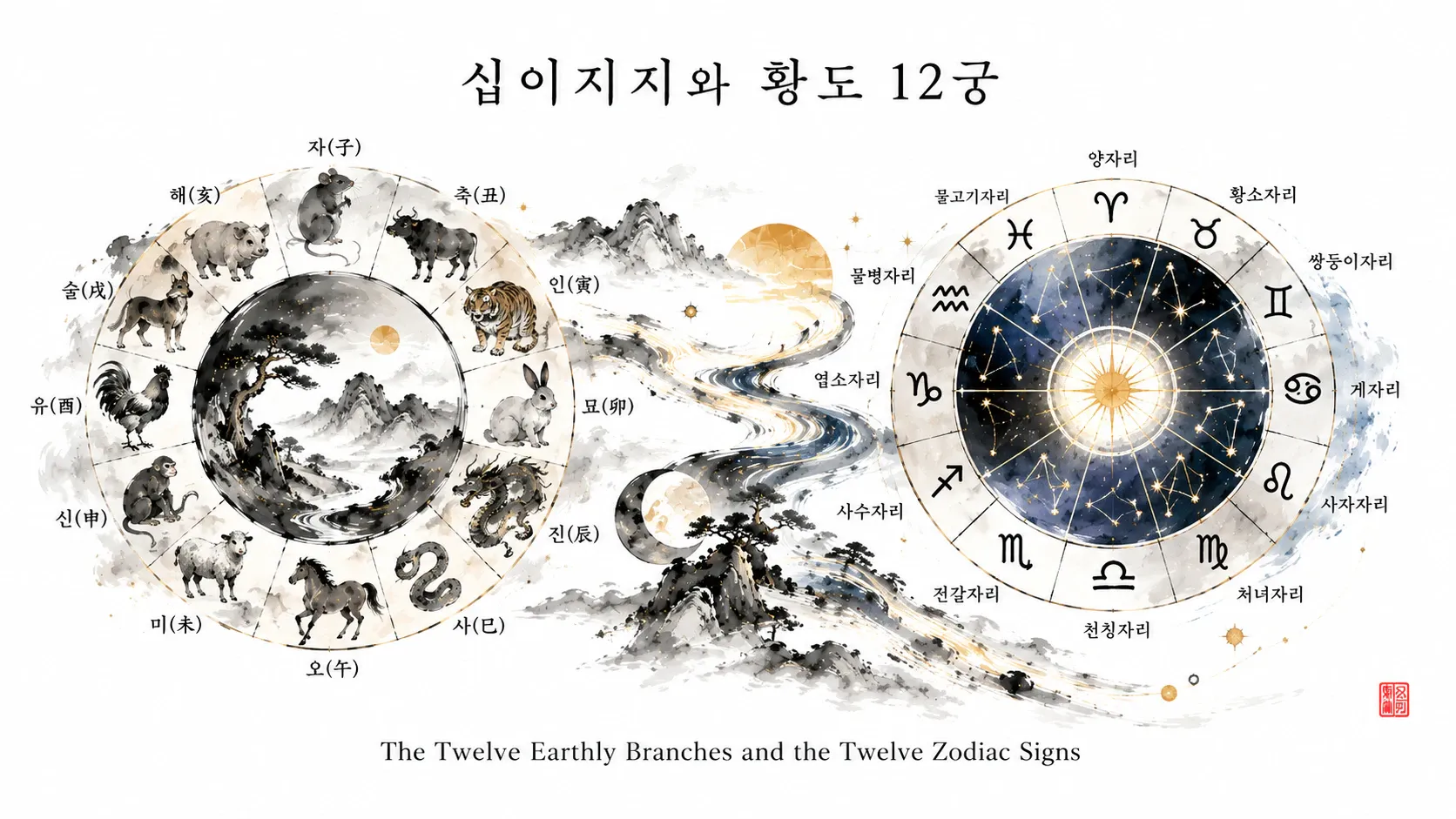
Earthly Branches also serves as an indispensable factor in Four Pillars of Destiny interpretation. These branches represent more concrete and realistic energy compared to the Heavenly Stems. The relationships between branches—such as Branch combination, Branch clash, Branch penalty, and Branch break—significantly impact the flow of the entire Four Pillars of Destiny and an individual’s life. Furthermore, analyzing the hidden stems inside the Branches—the hidden Heavenly Stems within each branch—helps in understanding the latent characteristics and potential of the Day Master.
The distribution of the five elements throughout the entire Four Pillars is also essential. An excess or deficiency of a specific element can cause issues. For example, an overabundance of Fire element energy might lead to impatience or difficulty with anger management, while a severe lack of Water element energy could result in difficulty expressing emotions or weak willpower. Conversely, if the five elements are arranged in harmony, they complement each other, increasing the likelihood of a stable and fulfilling life.
Many people tend to claim the positive traits of their Day Master while ignoring or blaming other factors for their negative ones. For example, some might expect abundance because they have an Eating God star, only to face financial hardship due to the influence of other characters. It is also a misconception to reject or deem a Four Pillars of Destiny analysis wrong simply because a specific interpretation of the Day Master does not align with one’s self-image.
A Four Pillars of Destiny reading is not about making absolute judgments, but rather a process of exploring the possibilities that emerge through the interaction of various energies. The Day Master is merely the starting point; the ultimate result depends on the harmony and balance of the entire Four Pillars, as well as the flow of the ten-year luck cycle and annual luck cycle. Therefore, it is important to acknowledge the Day Master’s traits without viewing them as absolute, and instead take a comprehensive look at the entire Four Pillars of Destiny.
The Day Master is an essential starting point for interpreting the Four Pillars. While it helps identify basic tendencies and potential, it cannot judge everything alone. A person’s life is shaped by a complex interplay of factors, including the balance of the five elements, the dynamic relationships among the Earthly Branches, and the seasonal characteristics of the Month Branch. Beyond understanding the Day Master, one must develop the insight to view the entire Four Pillars as a single, organic whole to truly grasp its balance and harmony.
In the next article, we will delve deeper into how ‘absence’ versus ‘weakness’ of an element affects a Four Pillars of Destiny reading and how that influences interpretation. This will provide further insight into other critical standards for mastering the Four Pillars.