
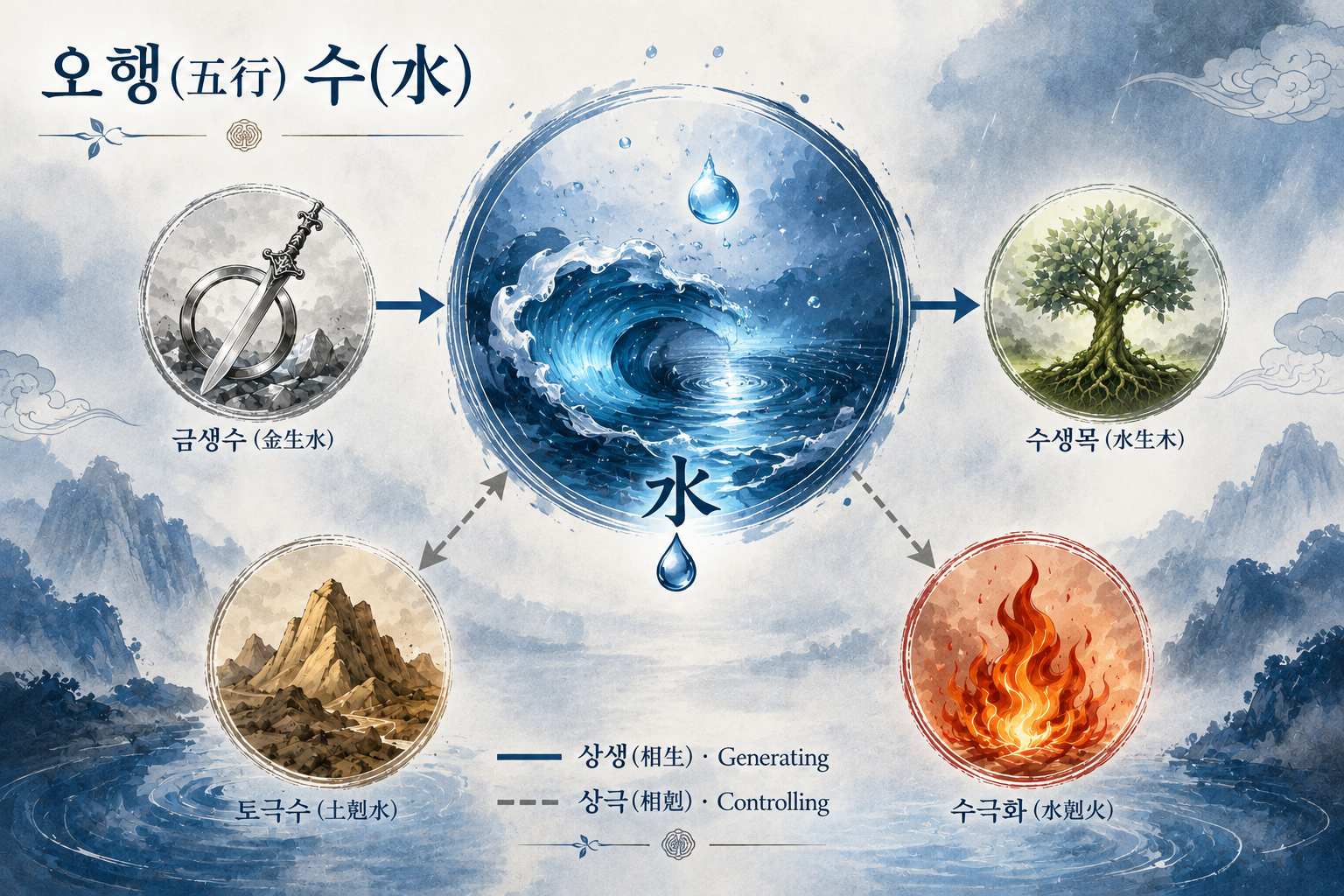
In the context of the Five Elements within the Four Pillars, the Water element element represents the source of all things and a symbol of change, embodying flow, wisdom, and depth. As the third installment in our Five Elements series, this article explores the fundamental meaning of the Water element, its natural symbolism, and its generating (generating) and overcoming (overcoming) relationships with other elements from a foundational perspective. Discover the multifaceted aspects of Water element and broaden your understanding of the Four Pillars interpretations.
What Does the Water element Element Represent?
In the Five Elements theory, the Water element element signifies more than just physical water. It symbolizes movement related to flow, condensation, storage, wisdom, change, flexibility, and introspection. It is the fundamental force that nurtures all things and sustains life, embodying adaptability and the capacity to encompass and transform. While Water element may appear calm on the surface, it harbors an unending vitality and potential for change. These characteristics offer crucial insights for understanding an individual’s mindset, emotional depth, and adaptability within the Four Pillars.
Natural Symbolism of the Water element Element: Water and Winter
The most immediate natural images associated with Water element are the sea, rivers, springs, and winter. The sea represents depth and vastness, holding all things; rivers symbolize constant flow and change. Springs, as the source of life, also signify emerging wisdom. Seasonally, Water element corresponds to winter, a time when all life pauses and energy condenses. It is also associated with the north direction and the color black. This traditional symbolic system connects the natural cycle and cardinal directions with the characteristics of the Five Elements.
Summary of Water element Element’s Core Attributes
| Attribute | Symbol | Description |
|---|---|---|
| Flow and Change | Rivers, Clouds | Moves ceaselessly without fixing, changing forms. |
| Condensation and Storage | Winter, Deep Sea | Gathers and preserves energy, possessing depth. |
| Wisdom and Contemplation | Calm Lake | Introspection and insight into the essence of things. |
| Flexibility and Adaptability | Water Droplets | Ability to fit into any container and conform to the environment. |
| Source of Life | Drinking Water | An essential element that enables growth and sustains life for all things. |
The generating Relationship of Water element
The generating represents a relationship where the Five Elements support and nurture each other. The Water element element either bestows vitality upon other elements or derives strength from them.
Metal Generates Water (金生水)
The Metal element element generates Water element. This originates from natural phenomena such as metal melting into liquid or water emerging from rock crevices. It signifies the transformation of the solid, condensed energy of Metal into the flexible flow of Water. In the Four Pillars, this relationship can be interpreted as the Metal element’s ability to produce and gather strengthening the wisdom and flexibility of Water.
Water Generates Wood (水生木)
The Water element element generates Wood. Just as water nourishes trees and brings them to life, the vitality and nutrients of Water support the growth and development of Wood. This relationship means that Water’s wisdom and flexibility underpin Wood’s drive and creativity, providing a stable foundation for Wood’s growth.
The overcoming Relationship of Water element
The overcoming represents a relationship where the Five Elements control and overcome each other. This is not merely a negative interaction but a crucial factor in achieving harmony among the elements through balance and regulation.
Earth Overcomes Water (土剋水)
The Earth’s element overcomes Water element. Just as earth can block or contain water flow to prevent floods and give it shape, Earth’s stability and control regulate Water’s unrestrained movement. In the Four Pillars, Earth’s practical limitations or discipline can prevent Water’s excessive fluidity or stagnation.
Water Overcomes Fire (水剋火)
The Water element element overcomes Fire’s. Just as water extinguishes fire, Water’s calm and condensed energy controls Fire’s hot and expansive energy. This means that Water’s wisdom and composure regulate Fire’s excessive passion or impulsiveness, bringing balance. In the Four Pillars, Water’s rational judgment can be seen as calming Fire’s emotional outbursts.
Considerations When Interpreting Water element in the Four Pillars
It is highly misleading to definitively conclude a specific personality or destiny based solely on the abundance or scarcity of Water element within the Four Pillars. While Water element possesses positive attributes such as wisdom, flexibility, depth, and adaptability, an excess can manifest as indecisiveness, stagnation, loneliness, or emotional volatility. Conversely, a deficiency of Water element might lead to a lack of flexibility, difficulty in expressing emotions, or a perception of lacking wisdom. The key is to comprehensively assess the role of Water element within the overall harmony of the Five Elements in the Four Pillars and how it interacts with other elements. Instead of defining a person’s complex nature by a single element, it is crucial to strive for an understanding of the complete flow and balance.
Transition to the Next Element: Metal element
We have now explored the fundamental meaning of Water element and its generating and overcoming relationships. The Water element element is a crucial component of the Five Elements, symbolizing the origin of all things, the power of change, and the endowment of life and wisdom. In our next installment of the Five Elements series, we will delve into the fourth element, Metal element. We invite you to anticipate the meanings associated with Metal, such as fruition, solidity, and loyalty, along with its generating and overcoming relationships.


