As the eighth character among the Heavenly Stems, Gyeong (庚) (庚) belongs to the Metal element element and embodies the Yang polarity polarity. With its strong and unyielding metallic image, Gyeong (庚) plays a significant role in the Four Pillars natal chart structure, and understanding how its energy manifests is crucial. This article delves into the essential characteristics of Gyeong (庚) and provides clear criteria for interpreting its influence in relation to other elements.
Understanding the Fundamental Meaning and Chinese Characters of Gyeong (庚)
As the eighth character among the Heavenly Stems, Gyeong (庚) (庚) is a Chinese character meaning ‘strong,’ ‘firm,’ or ‘to reform.’ Beyond simply denoting robustness and hardness, it carries profound implications, symbolizing change, reform, and fruition. Much like how fruits ripen and are harvested in autumn, Gyeong (庚) signifies the process of completing something, reorganizing existing elements, and transforming them to progress to the next stage.
Within the Four Pillars, Gyeong (庚) is interpreted as the energy that drives this process of change and fruition. Rather than initiating something entirely new, it possesses the power to refine existing elements, remove the unnecessary, reveal the essence, or facilitate rebirth into a superior form. This is comparable to smelting ore into steel or separating seeds from fruit.
Core Characteristics of Gyeong (庚) from the Perspective of Yin-Yang and the Five Elements
Gyeong (庚) belongs to the Metal element element among the Five Elements and possesses the energy of the Yang polarity polarity. Thus, Gyeong (庚) is referred to as ‘Yang Metal’ (陽金), characterized by its hardness, strength, and resistance to external pressure. The energy of Yang Metal symbolizes an active, enterprising spirit and the relentless drive to pursue goals.
The Metal element is also known as Suks 살ji Gi (肅殺之氣), a concept in East Asian philosophy referring to a stern, decisive energy that collects and organizes all things, cutting away the unnecessary. Gyeong (庚) expresses these characteristics of Metal in their most primal and intense form. Like unrefined ore, it is strong and rugged, yet simultaneously holds great potential and the possibility for change. This intrinsic nature manifests in various ways through the harmony of other Five Elements within the Four Pillars natal chart structure.
Natural Imagery and Energy Flow: Unrefined Steel and Autumn Frost
The natural imagery associated with Gyeong (庚) is highly diverse. Most notably, it evokes images of hard and sharp metals such as unrefined ore, steel, large rocks, weapons, axes, and swords. It is also linked to the seasonal energies of autumn frost or autumn leaves, which gather and bring all things to fruition. These images intuitively demonstrate the inherent toughness, decisiveness, and power to drive change that Gyeong (庚) possesses.
The energy of Gyeong (庚) tends to converge and condense inward rather than dissipate outward. This is akin to the autumn season, when all life forces gather into fruits, preparing for and organizing for winter. Consequently, Gyeong (庚) has a tendency to grasp the core of any situation, eliminate unnecessary elements, and focus on the essence. This directional flow of energy serves as a crucial clue to understanding the role of Gyeong (庚) within the Four Pillars natal chart structure.
Interpreting the Position of Gyeong (庚) within the Four Pillars natal chart structure
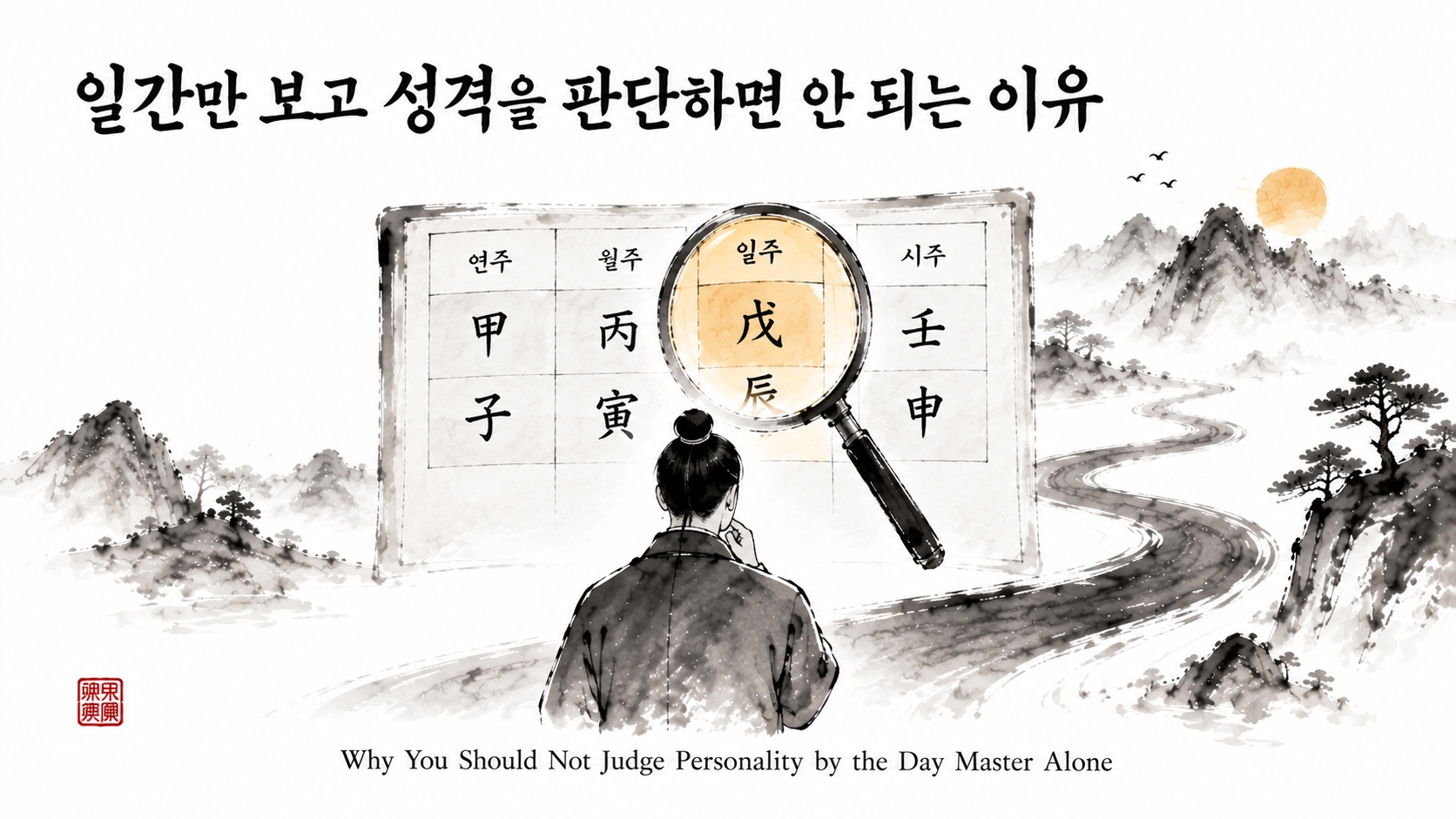
The position of Gyeong (庚) (庚) within the Four Pillars natal chart structure significantly influences how its energy manifests. Heavenly Stems can be located in the Year Pillar, Month Pillar, Day Pillar, and Hour Pillar, each position carrying distinct implications.
- Year Pillar of Gyeong (庚): This position can indicate a strong and independent spirit related to ancestors, nation, or early life environment. It may also suggest a background of growth amid social changes or reform movements.
- Month Pillar of Gyeong (庚): The characteristics of Gyeong (庚) manifest in one’s profession, social life, and relationships with siblings. It can signify strong social drive and leadership, or a tendency to pioneer specific fields with expertise.
- Day Pillar of Gyeong (庚): If the Day Master is Gyeong (庚), the person’s inherent disposition and independent characteristics are influenced by Gyeong (庚). They are likely to possess strong will, decisiveness, a sense of justice, and a nature unafraid of change.
- Hour Pillar of Gyeong (庚): The energy of Gyeong (庚) affects one’s late-life fortune, children, and personal activities or thoughts. Individuals may remain active in old age or tend to pursue new endeavors without compromising their beliefs.
In each position, Gyeong (庚) forms more specific meanings, extending beyond its inherent characteristics through combinations with other Earthly Branches (지지) and the overall harmony of the natal chart structure.
Interactions with Other Heavenly Stems and Earthly Branches: The Dynamic Nature of Gyeong (庚)
The characteristics of Gyeong (庚) (庚) transform dynamically through interactions with other Heavenly Stems or Earthly Branches (지지). According to the principles of Saeng-Geuk-Je-Hwa (生剋制化), a concept in the Five Elements theory describing production, control, regulation, and transformation among elements, Gyeong (庚) can become stronger or weaker, or even morph into entirely different forms, when interacting with other elements.
- Relationship with
Gapmok(甲木): Gyeong (庚) controlsGapmok, playing a role in refining it. This is akin to processing raw timber into useful tools, providing Gyeong (庚) with a target to exercise its abilities, while forGapmok, it is a process of completion through growing pains. - Relationship with
Eulmok(乙木):Eulmokis likened to soft grass or flowers. If Gyeong (庚) controlsEulmok, its strength can be overwhelming, easily damagingEulmok. This indicates that the strong energy of Gyeong (庚) requires moderation when dealing with delicate elements. - Relationship with
Byeonghwa(丙火):Byeonghwais like the sun, serving to refine Gyeong (庚). This process is similar to melting metal with intense heat to remove impurities and forge it into a harder, more useful form. For Gyeong (庚),Byeonghwais a crucial entity that helps it achieve completion. - Relationship with
Jeonghwa(丁火):Jeonghwasignifies concentrated heat, like a candlelight or a furnace fire. For Gyeong (庚),Jeonghwaalso plays a refining role, similar toByeonghwa, but the process may be more delicate and focused. - Relationship with Earthly Branches (
지지): Encounters with Earthly Branches (지지) impart environmental background and seasonal characteristics to Gyeong (庚). For instance, meeting Earthly Branches with Metal energy, such asSingum(申金, the Monkey) orYugeum(酉金, the Rooster), further amplifies the resilience of Gyeong (庚). Conversely, encountering Earthly Branches with Wood energy, likeInmok(寅木, the Tiger) orMyomok(卯木, the Rabbit), provides Gyeong (庚) with a target to exert its power but can also lead to the depletion of its own energy.
Thus, the role and manifestation of Gyeong (庚) vary significantly depending on the surrounding environment and the Five Elements it encounters. Therefore, one should not interpret it based solely on the characteristics of Gyeong (庚) itself.
Common Misconceptions When Interpreting Gyeong (庚) for Beginners
One of the most common misconceptions among Four Pillars beginners when interpreting Gyeong (庚) is to unequivocally label individuals with Gyeong (庚) as merely strong, stubborn, or even cold. While Gyeong (庚) certainly possesses potent energy, it manifests in various forms through the overall harmony of the natal chart structure. It can signify strong will, exceptional drive, or sometimes appear as a sense of justice or loyalty.
Another misconception is to solely associate the Metal element element with wealth or money. Beyond material possessions, the Metal element encompasses diverse meanings such as loyalty, decisiveness, Suks 살ji Gi, reform, change, and professionalism. Overlooking the essential meaning of Gyeong (庚) and focusing only on specific keywords leads to a narrow interpretation of the Four Pillars. It is crucial to understand that the meaning can vary greatly depending on how the strong energy of Gyeong (庚) is regulated and utilized.
Key Checkpoints for Interpreting Gyeong (庚)
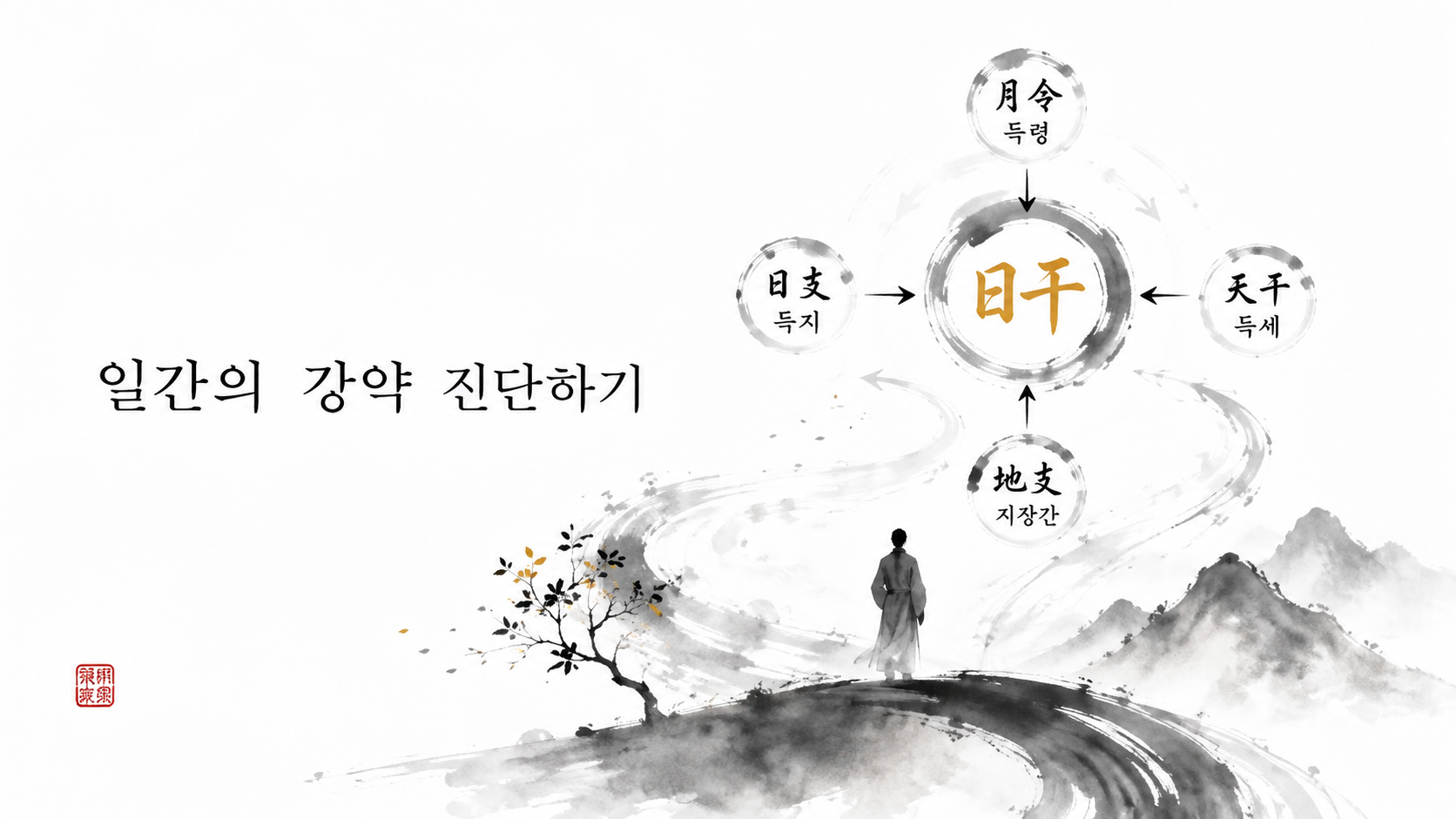
To accurately interpret Gyeong (庚) within the Four Pillars natal chart structure, several key checkpoints must be considered. It is important to go beyond simply listing the characteristics of Gyeong (庚) and instead grasp its role within the overall context of the natal chart structure.
Gyeong (庚) Interpretation Checklist
- Strength of Yin-Yang and the Five Elements: What is the overall strength of the Metal element within the natal chart structure? Is the Metal energy too strong or too weak?
- Harmony with Other Five Elements: What is the relationship between the Fire element energy that refines Gyeong (庚), the Water element energy that dissipates Gyeong (庚)’s energy, and the Wood element energy that Gyeong (庚) controls?
- Seasonal Background: How does the season of the month (
월) in which Gyeong (庚) is born affect its energy? Metal in autumn is strong, while Metal in summer tends to be weak. - seasonal regulation of the Natal Chart Structure: Is the overall temperature and humidity of the natal chart structure appropriate for Gyeong (庚)? How do excessively cold or hot environments affect the functioning of Gyeong (庚)?
- Interactions with Earthly Branches (
지지) (Hap-Chung-Hyeong-Hae):Hap-Chung-Hyeong-Hae(合沖刑害) refer to complex interactions (combinations, clashes, punishments, and harms) between Earthly Branches. Which Earthly Branch (지지) is placed beneath Gyeong (庚), and what interactions does it have with other Earthly Branches (지지)? These factors significantly influence how Gyeong (庚) manifests.
When considering these elements comprehensively, Gyeong (庚) can be interpreted not merely as a strong and stubborn energy, but as an excellent reformer, a possessor of sharp judgment, or an individual who achieves goals with strong will, depending on the situation. For the power of Gyeong (庚) to manifest positively, appropriate refining (Fire element) and dissipating (Water element) are necessary; otherwise, its potent energy could lead to problems.
Connecting to the Next Heavenly Stem, Sin (辛): The Refined Delicacy of a Jewel
So far, we have explored Gyeong (庚) (庚), which symbolizes a strong, firm energy of change and reform. If Gyeong (庚) represents the raw energy of Metal, like unrefined ore or steel, then the next Heavenly Stem, Sin (辛), can be compared to a jewel or an intricate metal product born through Gyeong (庚)’s numerous refining processes. While Gyeong (庚) initiates rough changes, Sin symbolizes the delicate and perfected beauty achieved through those transformations.
In the next installment, we will delve deeper into the fundamental meaning and interpretation criteria for Sin (辛), which possesses a charm distinct from the robustness of Gyeong (庚). Please look forward to understanding how the energy of Sin, perfected through the changes brought by Gyeong (庚), is read within the Four Pillars natal chart structure.